
Age is a guide
Readiness, chewing and swallowing skills, and health history still determine the right texture.
Realistic food for growing families
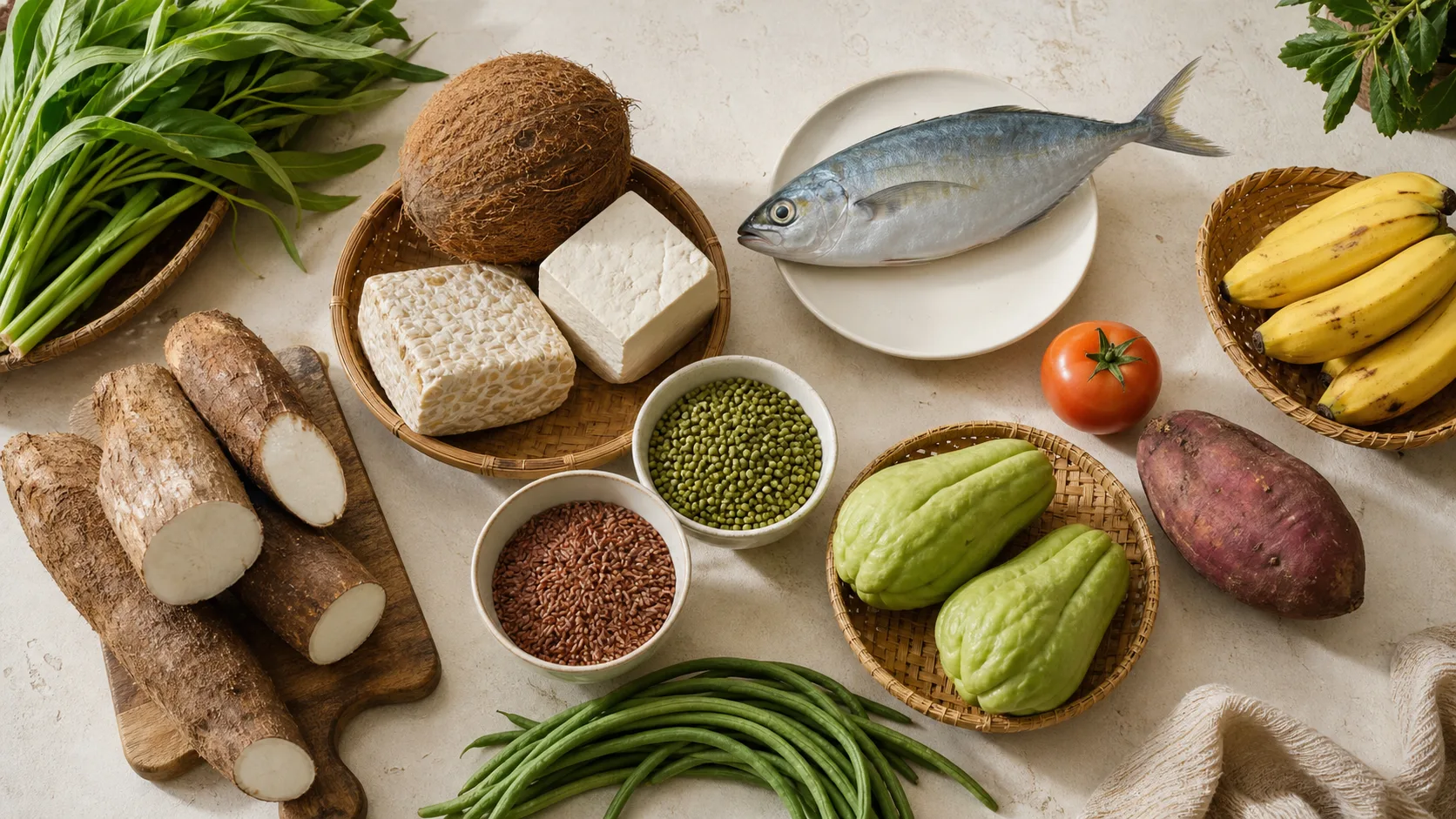
Choose by feeding stage, texture or time of day. Every menu is original, built around Indonesian ingredients, and includes clear allergen and safety notes.
Readiness, chewing and swallowing skills, and health history still determine the right texture.
Cook until soft, remove bones, avoid hard or round shapes, and supervise every meal.
Adults offer suitable food; children show hunger, fullness and how much they want to eat.
Feeding stage
Starting when the baby is around 6 months and shows signs of being ready to eat. Serve small portions with a manageable soft texture, then follow their hunger and fullness signals without pressure.
See 5 ideas → Complementary feeding · 7–8 monthsAt this stage, continue varying the taste and increase the texture from finely crushed to coarser, according to your baby's ability. Continue serving foods rich in nutrients and responsive to the baby's signals.
See 5 ideas → Complementary feeding · 9–11 monthsBabies who are capable can try finely chopped food, denser rice and soft finger foods. Vary the ingredients while maintaining safe food form and full assistance.
See 5 ideas → 12 months and beyond · family tableAt around 12 months, many children can eat small portions of family foods with adjustments in texture, salt, and shape. Separate the child's portion before adding salty sauce or chili sauce.
See 5 ideas → Finger food · from around 8 months when readyFinger foods need to be soft enough to crumble between two fingers and shaped to be easy to handle without becoming small, hard, round, or slippery.
See 5 ideas →Family rhythm
Build a plate from sources of energy, protein, vegetables or fruit, then adjust the size and texture. Small, expandable portions usually feel friendlier than full plates.
See 5 ideas → One family meal · adapted portionsUse one basic dish, separate the baby or toddler portion before salt, salty sauce and chili, then finish seasoning for adults. The texture of each portion remains adjustable.
See 5 ideas → Selective eating · calm, repeated exposureServe an accepted food with a few other ingredients, starting with small portions, and let the child decide whether and how much to eat. Repeated exposure is more important than one forced bite.
See 5 ideas → Weekly planning · toddlers and familiesPlan components, not 15 completely different recipes. One boiled chicken, one batch of rice, two types of vegetables, eggs, tofu or tempeh, and fruit can be rotated into a five-day menu.
See 5 ideas →Time of day
Snacks can be an opportunity to add protein, fruit, vegetables, or a source of energy—not just sweets. Choose one or two components and serve them at fairly regular times.
See 5 ideas → Breakfast · toddlers and childrenBreakfast doesn't always have to be bread or cereal. Use leftover rice, eggs, tofu, fish, fruit and tubers to make small portions that contain energy and protein.
See 5 ideas → Lunchboxes · nursery and schoolMake up your lunch from a familiar main food, a source of protein, and easy-to-eat fruit or vegetables. Variations can come from cuts and seasonings, not from complex recipes.
See 5 ideas →CookClip keeps recipes, editable steps, meal plans and grocery lists together on iPhone and iPad.
Editorial basis
These menu ideas are general inspiration. Starting age, texture, responsive feeding, allergens and choking-prevention notes are based on official health guidance and do not replace individual medical or dietetic advice.
Save your chosen recipes in CookClip, adapt the steps for your family, schedule meals and build a grocery list from one collection.