
Starting solids · around 6 months
Baby-food ideas for around 6 months
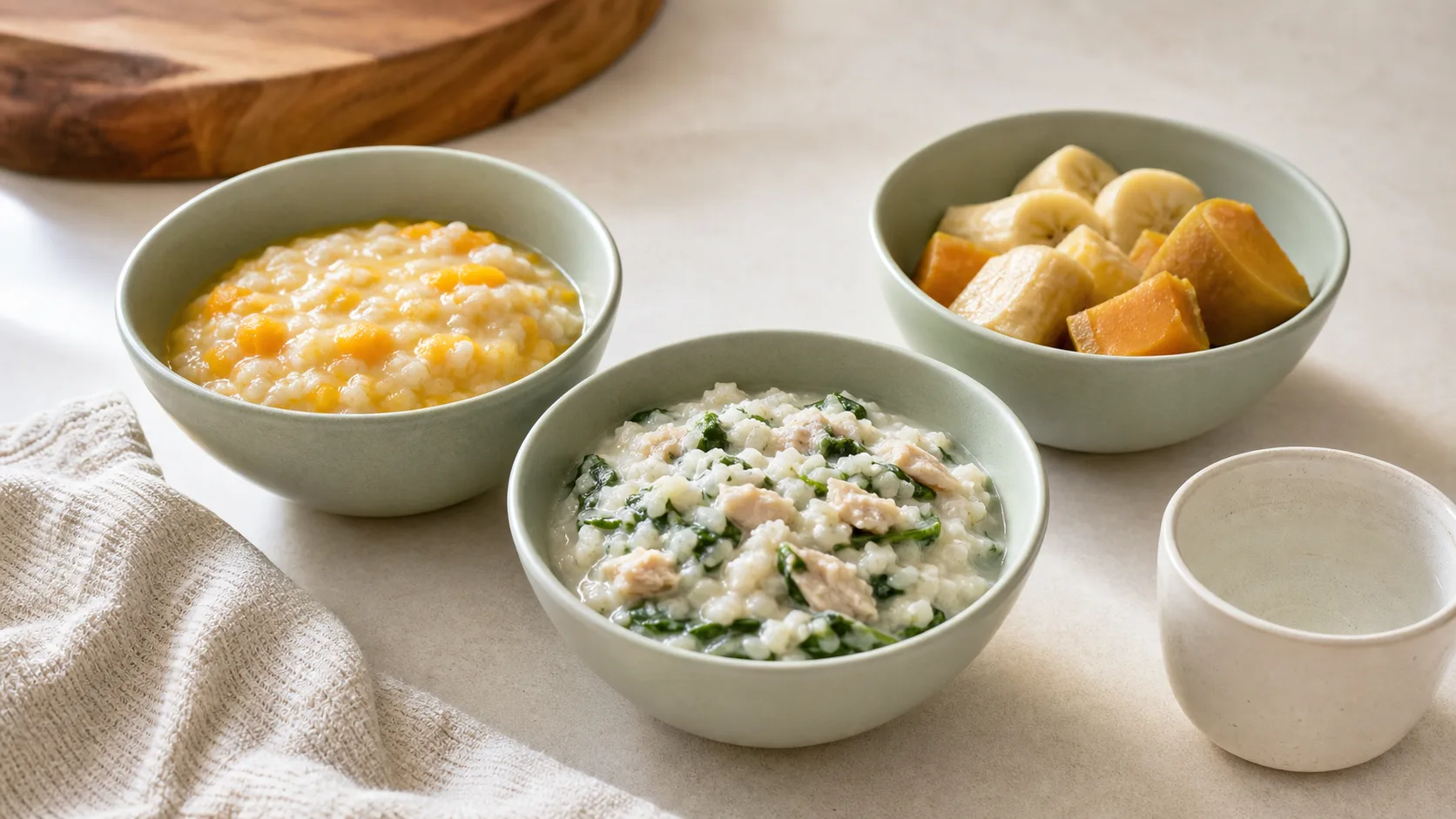
Starting when the baby is around 6 months and shows signs of being ready to eat. Serve small portions with a manageable soft texture, then follow their hunger and fullness signals without pressure.
Sources reviewed for clarity:
Who it is for
Feeding stage
Babies who have just started complementary foods and have shown developmental readiness
Texture
Serving style
Finely mash, thick porridge, or very soft food according to the baby's ability
Meal timing
A flexible rhythm
Morning, afternoon or evening in the introductory portion
Important
Safety first
The age in the title is a general guide, not a test of readiness. If the baby was born prematurely, has growth disorders, difficulty swallowing, or certain medical conditions, determine the start time with a doctor or health professional.
Want to try one of these this week?
Save your chosen idea in CookClip, edit ingredients or portions, then add it to your meal plan.
Before you start
Preparation that makes the week easier
- 1
Cook with clean hands, tools, water and surfaces. Cool leftover food quickly and do not store food that has been touched by saliva from a baby's spoon.
- 2
Offer one new allergen at a time in very small amounts to make the reaction easier to spot.
- 3
Breast milk or formula milk is still given as needed; complementary foods complements, not directly replaces all milk intake.
Health and safety
General inspiration, not an individual medical recipe
Complementary foods generally begin at around 6 months once readiness signs appear. Increase variety and consistency with the child's skills, respond to hunger and fullness cues, and supervise every meal.
Avoid honey before 12 months, whole nuts for children under 5, hard or round foods, and added salt or sugar in baby food. Introduce allergens one at a time in small amounts; seek individual advice for allergies, severe eczema, prematurity, growth concerns or swallowing difficulties.
Related ingredients
Keep going with ingredients you already have
FAQ
Frequently asked questions
Is a baby at exactly 6 months ready for complementary foods?
Not necessarily. Around 6 months is a common starting point, but babies also need to be able to hold their heads up, sit up with assistance, bring food to their mouth, and swallow instead of constantly pushing food out.
Should all complementary foods first be blended very finely?
Not always. Some babies can start on crushed or very soft foods. Choose a texture that your baby can manage and increase gradually as their feeding skills develop.
Is it OK to add salt or sugar?
No need. Use natural flavors of ingredients and avoid adding salt, sugar, honey, salty broth, or sauces to baby portions.
How much should my baby eat?
There is no one portion that is suitable for all babies. Start with a small amount, offer patiently, and stop when the baby closes their mouth, turns their head, or shows that they are full.
Read next
Ideas for another stage or time of day
Official sources
What this guidance is based on
CookClip wrote every menu idea from scratch. Age, texture, allergen and safety notes are based on the official sources below.
- WHO: Complementary feedingStarting at around 6 months, meal frequency, varied textures, family foods and responsive feeding.
- Indonesian Ministry of Health: Complementary-feeding recipesTimely, safe, adequate and varied complementary feeding based on everyday ingredients.
- NHS: Your baby's first solid foodsReadiness signs, texture progression, responsive feeding and supervision.
- NHS: Foods and drinks to avoidHoney, salt, whole nuts, selected raw foods and drinks to avoid.
- CDC: Choking hazardsShape, size, texture, seated posture and supervision to reduce choking risk.
Make this idea part of a real meal plan
Save the recipe in CookClip, adapt it for your family, schedule it and choose which ingredients belong on your grocery list.