Lunchboxes · nursery and school
Practical lunchbox ideas for children
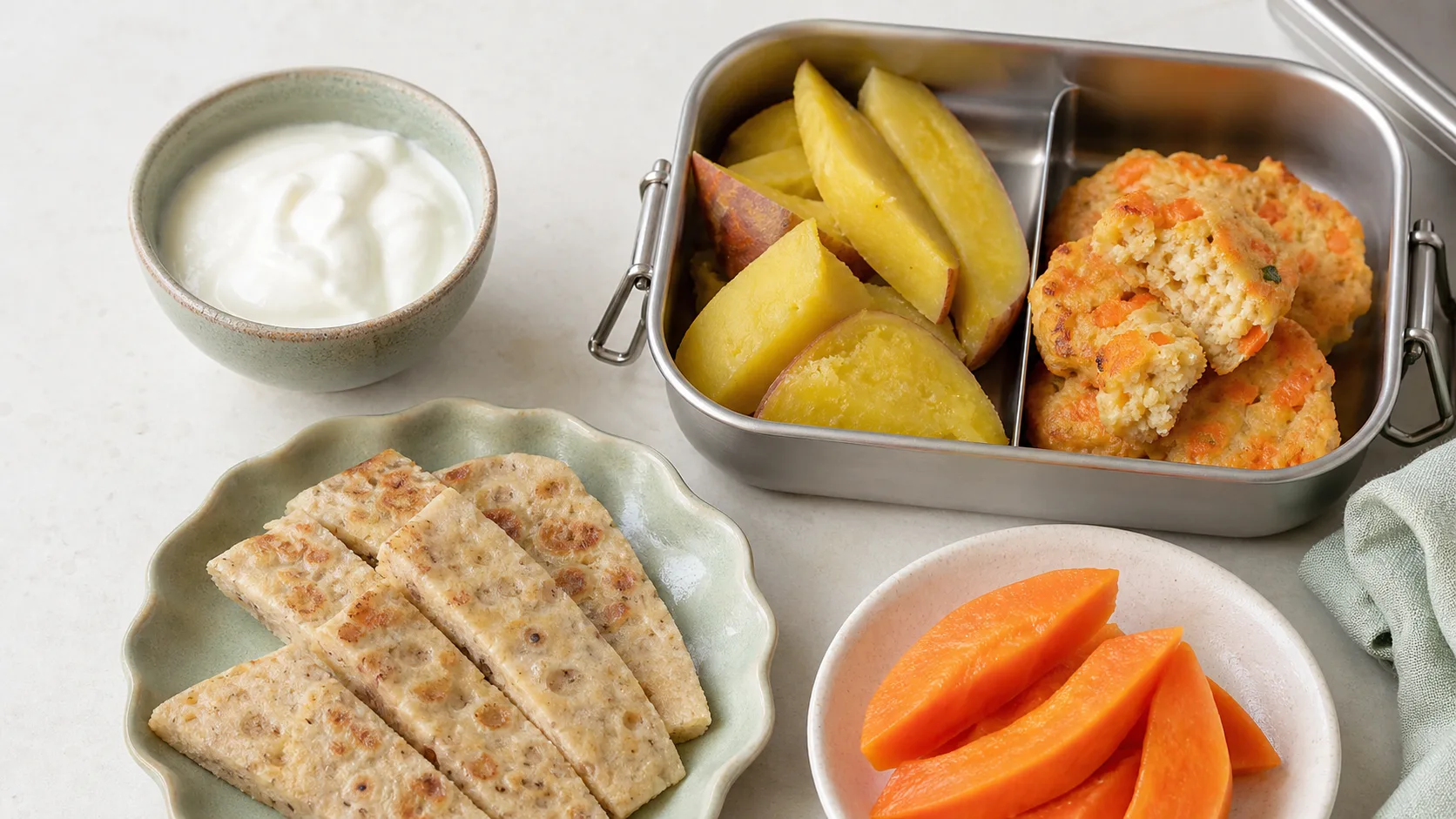
Make up your lunch from a familiar main food, a source of protein, and easy-to-eat fruit or vegetables. Variations can come from cuts and seasonings, not from complex recipes.
Sources reviewed for clarity:
Who it is for
Feeding stage
Older toddlers and school children, with meals sized according to ability
Texture
Serving style
Easy to take, not too soupy, and remains safe after storage
Meal timing
A flexible rhythm
Planned morning supplies, lunch or snacks
Important
Safety first
Perishable foods require insulated boxes and appropriate ice packs. Make sure the school or caregiver knows about your child's allergies and how to serve lunch.
Want to try one of these this week?
Save your chosen idea in CookClip, edit ingredients or portions, then add it to your meal plan.
Before you start
Preparation that makes the week easier
- 1
Use the formula of one main, one protein, one color and water so that shopping and assembling supplies are more consistent.
- 2
Cook two portions of dinner that are suitable for lunch, instead of storing all kinds of random leftovers.
- 3
Label your name, date, and allergy needs if someone else handles the lunch.
Health and safety
General inspiration, not an individual medical recipe
Complementary foods generally begin at around 6 months once readiness signs appear. Increase variety and consistency with the child's skills, respond to hunger and fullness cues, and supervise every meal.
Avoid honey before 12 months, whole nuts for children under 5, hard or round foods, and added salt or sugar in baby food. Introduce allergens one at a time in small amounts; seek individual advice for allergies, severe eczema, prematurity, growth concerns or swallowing difficulties.
Related ingredients
Keep going with ingredients you already have
FAQ
Frequently asked questions
How to make lunch less boring?
Stick to familiar ingredients and switch up shapes, vegetable pairings, or light seasonings. Children don't need a new prescription every day.
Is it OK to bring rice from the night before?
It is okay if the rice is cooled and stored immediately, heated until steamy, then cooled to a safe lunchbox temperature.
What fruit is practical for lunch?
Small bananas, papayas, melons, seedless oranges, or other fruit cut safely according to the child's ability can be selected based on refrigeration facilities.
How to keep food safe?
Follow school rules and local food safety guidelines. Use clean boxes, ice packs for cold food, and don't store perishable food for too long at room temperature.
Read next
Ideas for another stage or time of day
Official sources
What this guidance is based on
CookClip wrote every menu idea from scratch. Age, texture, allergen and safety notes are based on the official sources below.
- WHO: Complementary feedingStarting at around 6 months, meal frequency, varied textures, family foods and responsive feeding.
- Indonesian Ministry of Health: Complementary-feeding recipesTimely, safe, adequate and varied complementary feeding based on everyday ingredients.
- NHS: Your baby's first solid foodsReadiness signs, texture progression, responsive feeding and supervision.
- NHS: Foods and drinks to avoidHoney, salt, whole nuts, selected raw foods and drinks to avoid.
- CDC: Choking hazardsShape, size, texture, seated posture and supervision to reduce choking risk.
Make this idea part of a real meal plan
Save the recipe in CookClip, adapt it for your family, schedule it and choose which ingredients belong on your grocery list.