Finger food · from around 8 months when ready
Soft finger-food ideas for babies
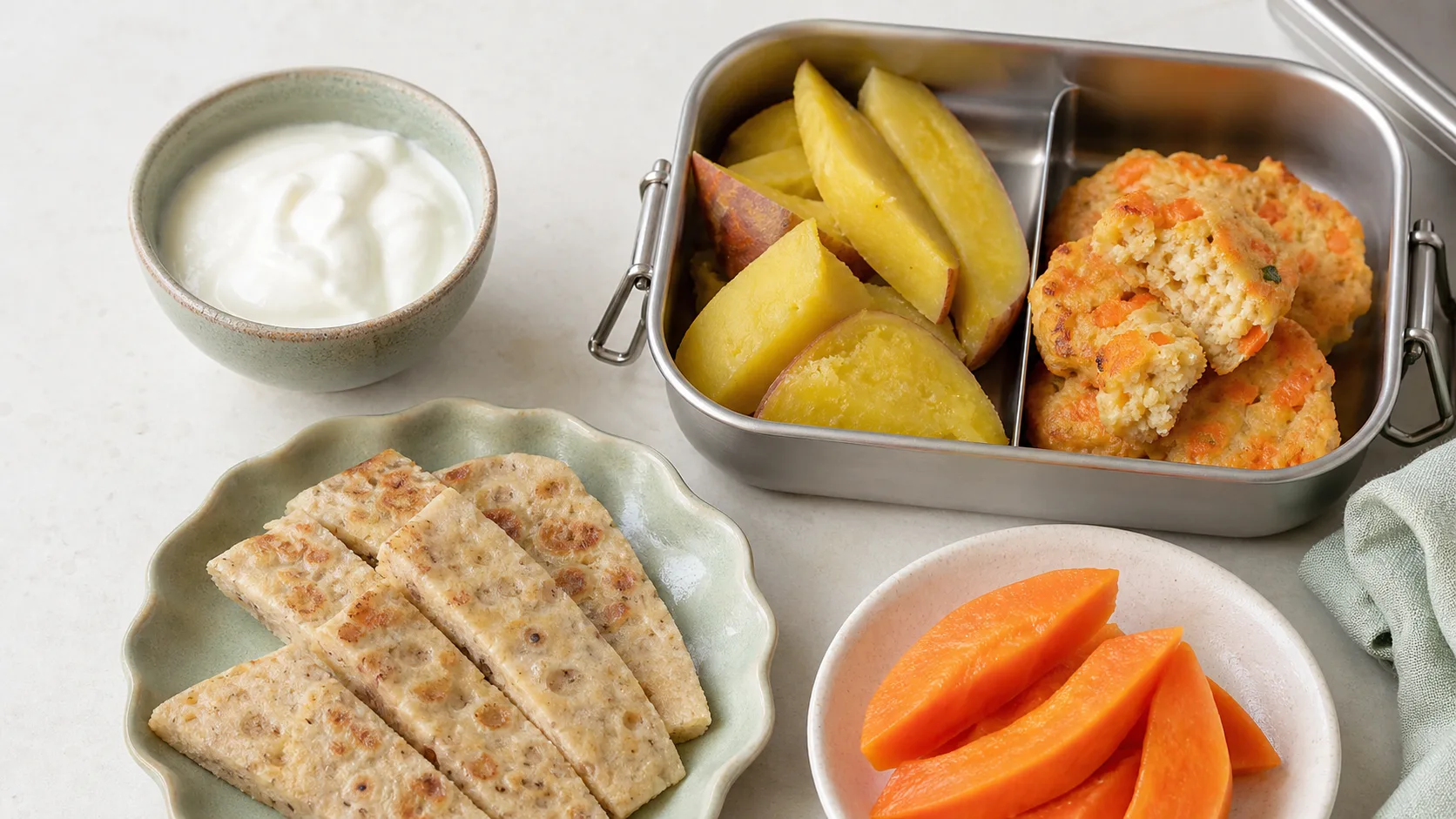
Finger foods need to be soft enough to crumble between two fingers and shaped to be easy to handle without becoming small, hard, round, or slippery.
Sources reviewed for clarity:
Who it is for
Feeding stage
Babies who are ready to take food and are able to bring food to their mouths
Texture
Serving style
Soft sticks, large pieces that flatten easily, or flat patties that don't dry out
Meal timing
A flexible rhythm
Part of a main meal or snack as needed
Important
Safety first
No form is completely risk-free. Sit the baby upright, always supervise them closely, and avoid hard, round, slippery, chewy, long-fibrous, bony or sticky foods.
Want to try one of these this week?
Save your chosen idea in CookClip, edit ingredients or portions, then add it to your meal plan.
Before you start
Preparation that makes the week easier
- 1
Use a two-finger test on each batch. Steaming time changes according to size and type of ingredients.
- 2
Serve a little at a time so the table isn't full of debris and adults can observe how the baby handles the food.
- 3
Gagging and choking are not the same thing. Learn the signs of both as well as baby first aid from an authorized training provider.
Health and safety
General inspiration, not an individual medical recipe
Complementary foods generally begin at around 6 months once readiness signs appear. Increase variety and consistency with the child's skills, respond to hunger and fullness cues, and supervise every meal.
Avoid honey before 12 months, whole nuts for children under 5, hard or round foods, and added salt or sugar in baby food. Introduce allergens one at a time in small amounts; seek individual advice for allergies, severe eczema, prematurity, growth concerns or swallowing difficulties.
Related ingredients
Keep going with ingredients you already have
FAQ
Frequently asked questions
When can babies eat finger foods?
Many babies start to become capable around 8 months, but developmental readiness is more important than the date. Babies need to be able to sit fairly stably, pick up food, and bring it to their mouth.
How soft are finger foods?
Food should be easily crushed or crushed between the thumb and forefinger without much force.
Do finger foods have to be small?
Not always. For beginner babies, larger pieces that can be held and are very soft are often easier than small dice.
Is BLW mandatory?
No. Families can use spoons, finger food, or a combination of both according to the baby's abilities, the caregiver's comfort, and the advice of health workers.
Read next
Ideas for another stage or time of day
Official sources
What this guidance is based on
CookClip wrote every menu idea from scratch. Age, texture, allergen and safety notes are based on the official sources below.
- WHO: Complementary feedingStarting at around 6 months, meal frequency, varied textures, family foods and responsive feeding.
- Indonesian Ministry of Health: Complementary-feeding recipesTimely, safe, adequate and varied complementary feeding based on everyday ingredients.
- NHS: Your baby's first solid foodsReadiness signs, texture progression, responsive feeding and supervision.
- NHS: Foods and drinks to avoidHoney, salt, whole nuts, selected raw foods and drinks to avoid.
- CDC: Choking hazardsShape, size, texture, seated posture and supervision to reduce choking risk.
Make this idea part of a real meal plan
Save the recipe in CookClip, adapt it for your family, schedule it and choose which ingredients belong on your grocery list.