
Complementary feeding · 7–8 months
Baby meals for moving beyond smooth purées
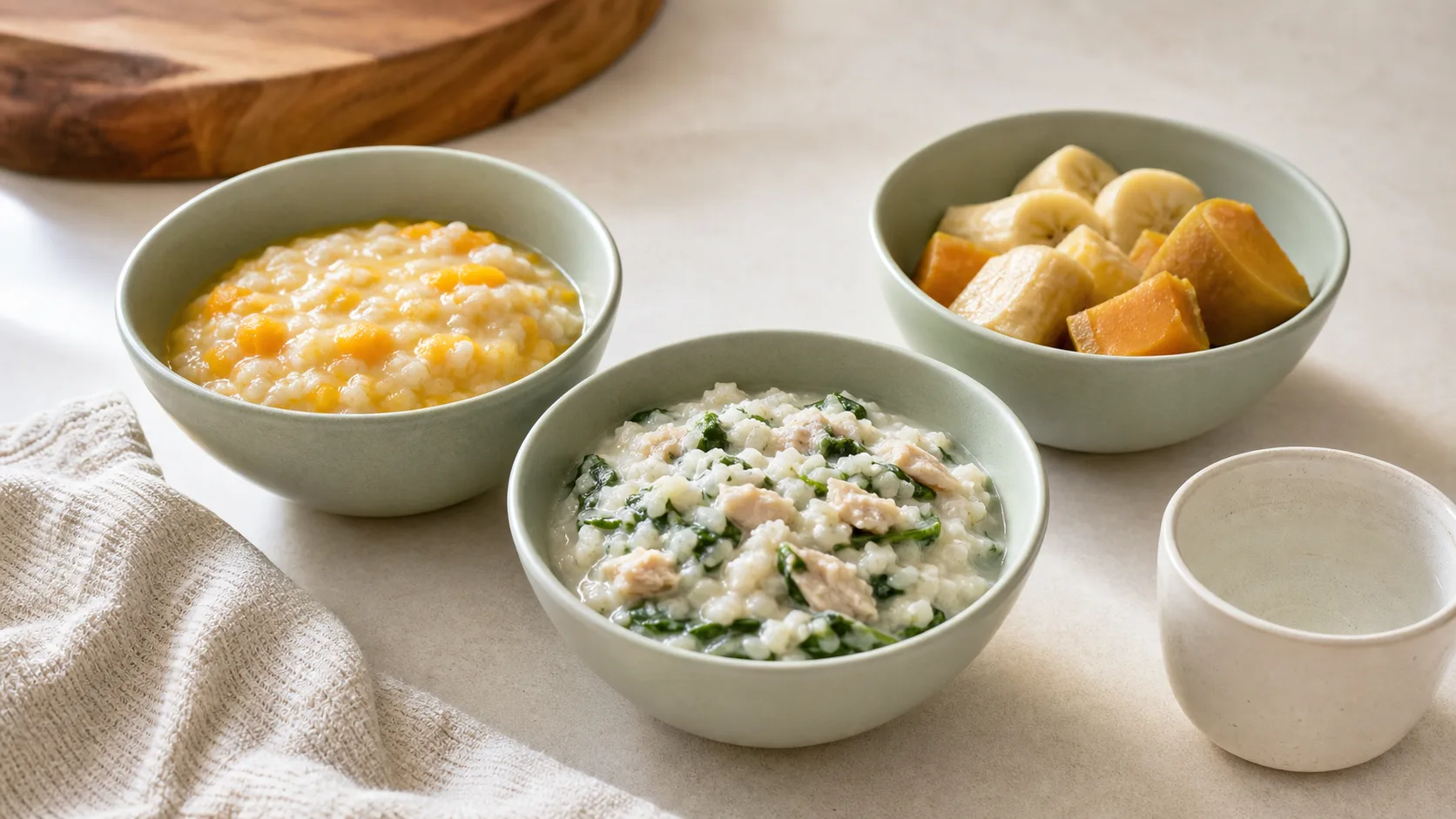
At this stage, continue varying the taste and increase the texture from finely crushed to coarser, according to your baby's ability. Continue serving foods rich in nutrients and responsive to the baby's signals.
Sources reviewed for clarity:
Who it is for
Feeding stage
Babies who are used to early food and are able to manage the texture of mashed food
Texture
Serving style
Coarsely crushed, thick mash, and very soft pieces that crumble easily
Meal timing
A flexible rhythm
Main meals 2–3 times a day, following the needs and guidelines of health workers
Important
Safety first
Eating development is not always the same. Don't force the texture up if the baby isn't able to, but don't hold down the smooth texture for longer without reason; discuss persistent eating difficulties with a health professional.
Want to try one of these this week?
Save your chosen idea in CookClip, edit ingredients or portions, then add it to your meal plan.
Before you start
Preparation that makes the week easier
- 1
Gradually increase the texture: from blender to fork mashed, then to very finely chopped when baby is ready.
- 2
Serve animal protein or other appropriate sources of protein each day, varying the type to keep flavours interesting.
- 3
Sit the baby upright, put away screens and toys, and stay with them throughout feeding time.
Health and safety
General inspiration, not an individual medical recipe
Complementary foods generally begin at around 6 months once readiness signs appear. Increase variety and consistency with the child's skills, respond to hunger and fullness cues, and supervise every meal.
Avoid honey before 12 months, whole nuts for children under 5, hard or round foods, and added salt or sugar in baby food. Introduce allergens one at a time in small amounts; seek individual advice for allergies, severe eczema, prematurity, growth concerns or swallowing difficulties.
Related ingredients
Keep going with ingredients you already have
FAQ
Frequently asked questions
What is the difference in texture at 6 months and 7–8 months?
There are no rigid boundaries. In general, babies who are capable can switch from finely ground to coarser mashed and very soft foods so that oral skills continue to develop.
Is it OK to give finger food?
Some babies around 8 months old are able to hold soft food. Make sure the shape, size and softness suit the baby's skills and always supervise it.
Does every meal have to include rice?
No. Safely processed sweet potatoes, potatoes, oats, corn, and other carbohydrate sources can be used interchangeably with protein, vegetables, and fat.
What if the baby rejects the new texture?
Go back one step if necessary, offer again at another opportunity, and don't force it. Seek professional help if coughing, choking, or difficulty swallowing occurs repeatedly.
Read next
Ideas for another stage or time of day
Official sources
What this guidance is based on
CookClip wrote every menu idea from scratch. Age, texture, allergen and safety notes are based on the official sources below.
- WHO: Complementary feedingStarting at around 6 months, meal frequency, varied textures, family foods and responsive feeding.
- Indonesian Ministry of Health: Complementary-feeding recipesTimely, safe, adequate and varied complementary feeding based on everyday ingredients.
- NHS: Your baby's first solid foodsReadiness signs, texture progression, responsive feeding and supervision.
- NHS: Foods and drinks to avoidHoney, salt, whole nuts, selected raw foods and drinks to avoid.
- CDC: Choking hazardsShape, size, texture, seated posture and supervision to reduce choking risk.
Make this idea part of a real meal plan
Save the recipe in CookClip, adapt it for your family, schedule it and choose which ingredients belong on your grocery list.