
Complementary feeding · 9–11 months
More textured meal ideas for 9–11 months
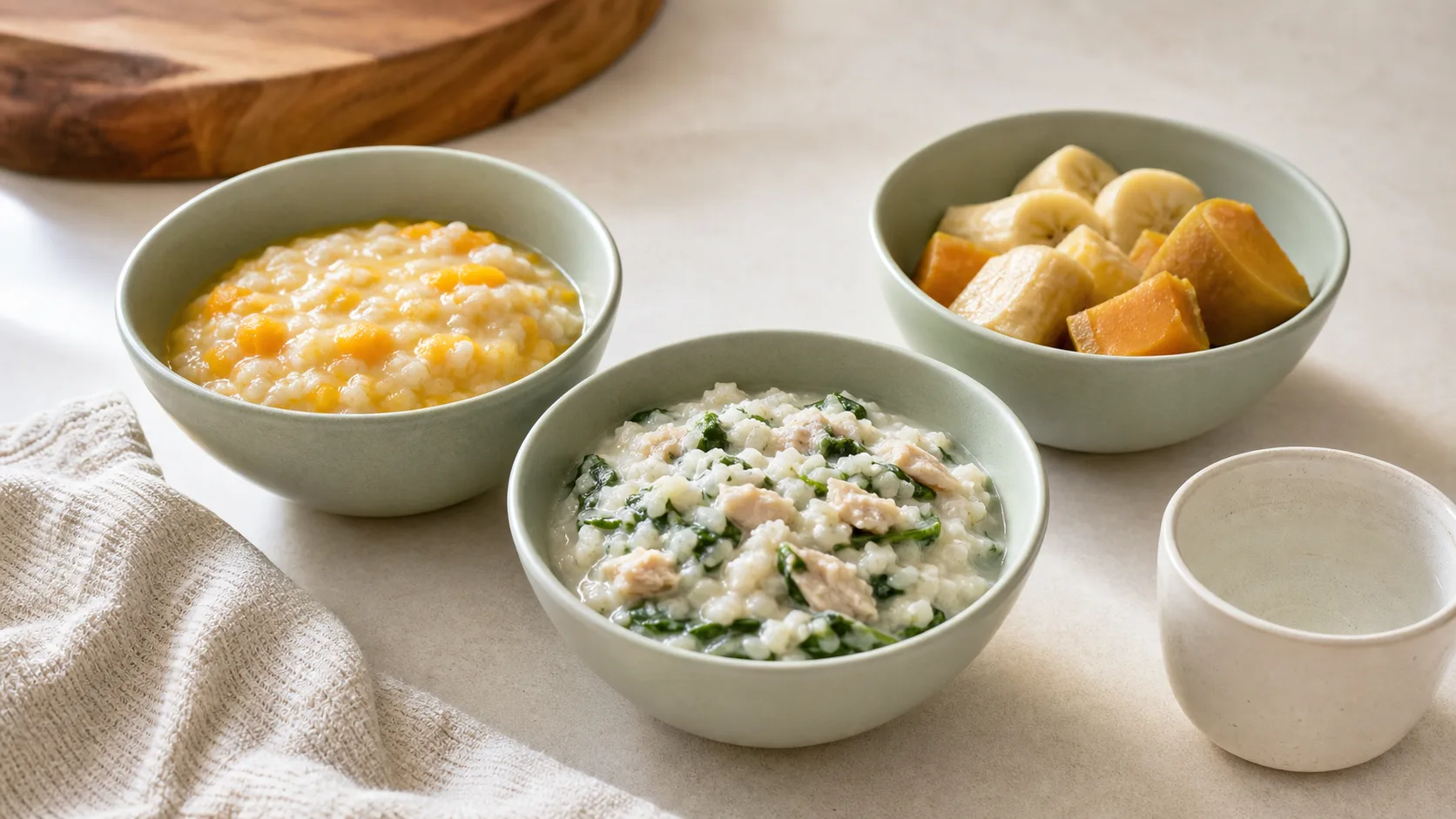
Babies who are capable can try finely chopped food, denser rice and soft finger foods. Vary the ingredients while maintaining safe food form and full assistance.
Sources reviewed for clarity:
Who it is for
Feeding stage
Babies who are able to sit stably with appropriate support and manage crushed foods more roughly
Texture
Serving style
Finely chopped, dense soft rice, very soft shredded, and a finger food that crumbles easily
Meal timing
A flexible rhythm
Main meals 3-4 times as needed, with a flexible schedule
Important
Safety first
Finger food does not mean that all food can be handled whole. Avoid round, hard, smooth, chewy, or sticky shapes; cook until soft and adjust the size according to the child's skills.
Want to try one of these this week?
Save your chosen idea in CookClip, edit ingredients or portions, then add it to your meal plan.
Before you start
Preparation that makes the week easier
- 1
Test the softness of the food between your thumb and forefinger; Suitable foods should be easily crushed or crushed.
- 2
Cut round or cylindrical foods into safer shapes and remove bones, bones, hard seeds and tough skin.
- 3
Coughing or gagging may occur while learning to eat, but choking can be quiet. Learn choking first aid from a trusted training provider.
Health and safety
General inspiration, not an individual medical recipe
Complementary foods generally begin at around 6 months once readiness signs appear. Increase variety and consistency with the child's skills, respond to hunger and fullness cues, and supervise every meal.
Avoid honey before 12 months, whole nuts for children under 5, hard or round foods, and added salt or sugar in baby food. Introduce allergens one at a time in small amounts; seek individual advice for allergies, severe eczema, prematurity, growth concerns or swallowing difficulties.
Related ingredients
Keep going with ingredients you already have
FAQ
Frequently asked questions
Should a 9 month old baby be able to eat mince?
Not all babies develop on the same schedule. Offer textural progression appropriate to ability and seek professional assessment if swallowing is difficult or progress is significantly delayed.
What is practical Indonesian finger food?
Steamed sweet-potato sticks, soft steamed cakes, slices of ripe banana, and steamed tofu can be an option if the texture and shape are safe.
Can I use noodles?
It's fine if it's cooked soft, cut very short, and doesn't use instant seasonings that are high in salt. Also check the egg or wheat content.
How to ensure fish are not bone-free?
Remove the main bones, shred under a bright light, feel all over the meat with clean fingers, then check again after mixing.
Read next
Ideas for another stage or time of day
Official sources
What this guidance is based on
CookClip wrote every menu idea from scratch. Age, texture, allergen and safety notes are based on the official sources below.
- WHO: Complementary feedingStarting at around 6 months, meal frequency, varied textures, family foods and responsive feeding.
- Indonesian Ministry of Health: Complementary-feeding recipesTimely, safe, adequate and varied complementary feeding based on everyday ingredients.
- NHS: Your baby's first solid foodsReadiness signs, texture progression, responsive feeding and supervision.
- NHS: Foods and drinks to avoidHoney, salt, whole nuts, selected raw foods and drinks to avoid.
- CDC: Choking hazardsShape, size, texture, seated posture and supervision to reduce choking risk.
Make this idea part of a real meal plan
Save the recipe in CookClip, adapt it for your family, schedule it and choose which ingredients belong on your grocery list.