
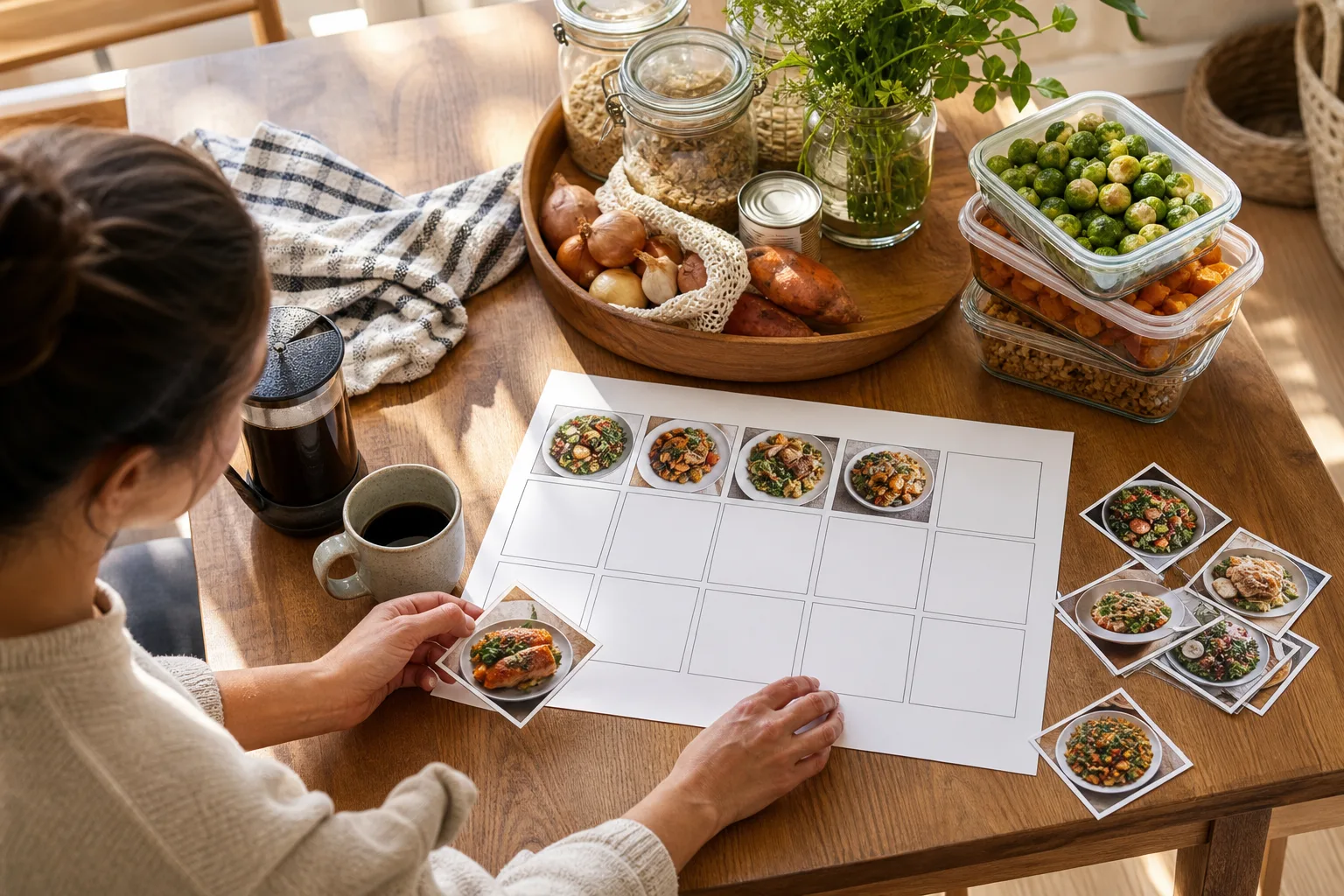
Quick answer
Use one short routine with a fixed order
Review the calendar, check perishables, choose three anchor meals, schedule leftovers and one flexible dinner, confirm servings, build the grocery list, and write down only the prep tasks that must happen before each meal.
Minutes 0–3: check the week
Look for late work, school activities, travel, guests, and meals already planned outside the home. Mark the evenings that need fast, reheatable, or no-cook options.
This prevents the common mistake of choosing recipes first and discovering later that the week cannot support them.
Minutes 3–6: check food that needs using
Scan the fridge, freezer, and produce bowl. Note leftovers, open packages, and perishables approaching their limit. Do not count every pantry item; identify only what should influence this week’s choices.
Inside the app
See the workflow in CookClip
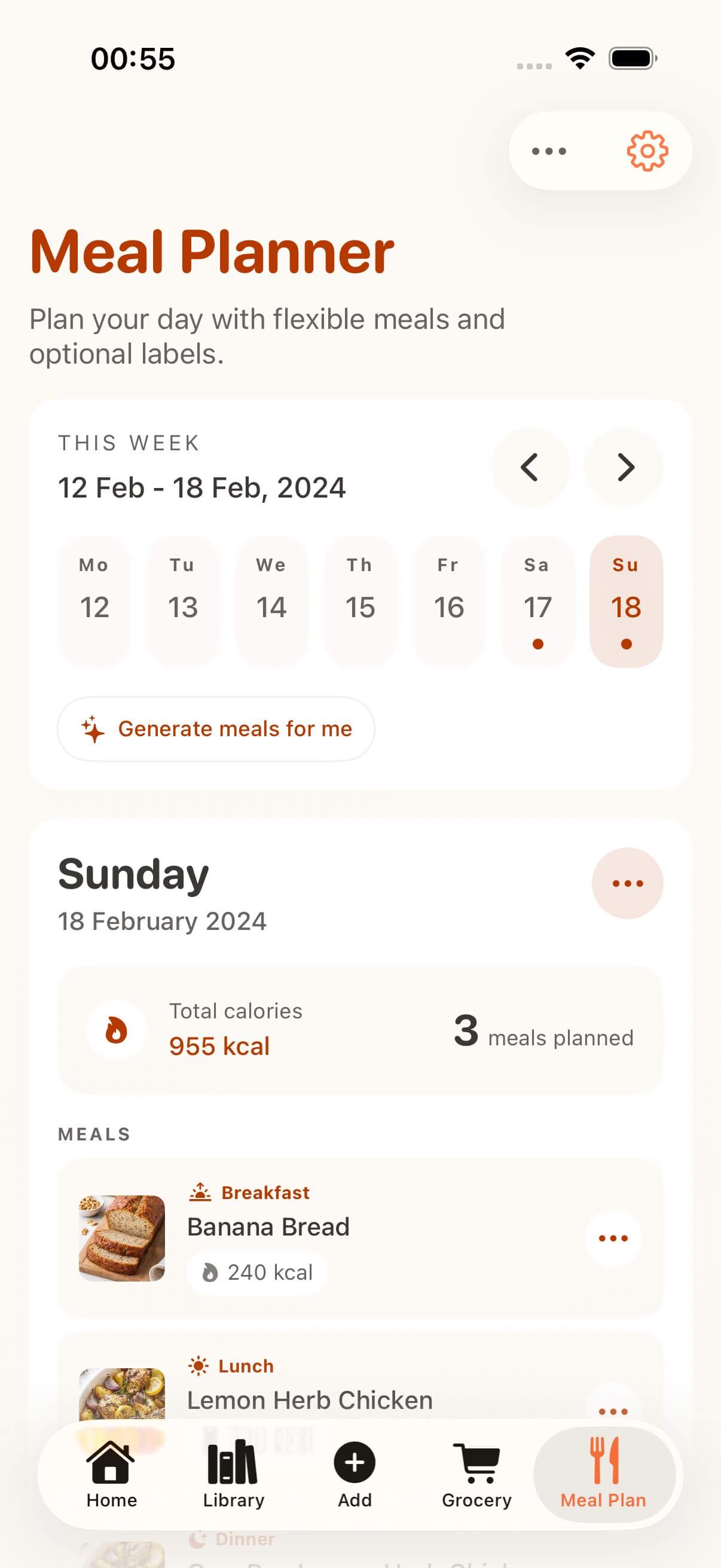
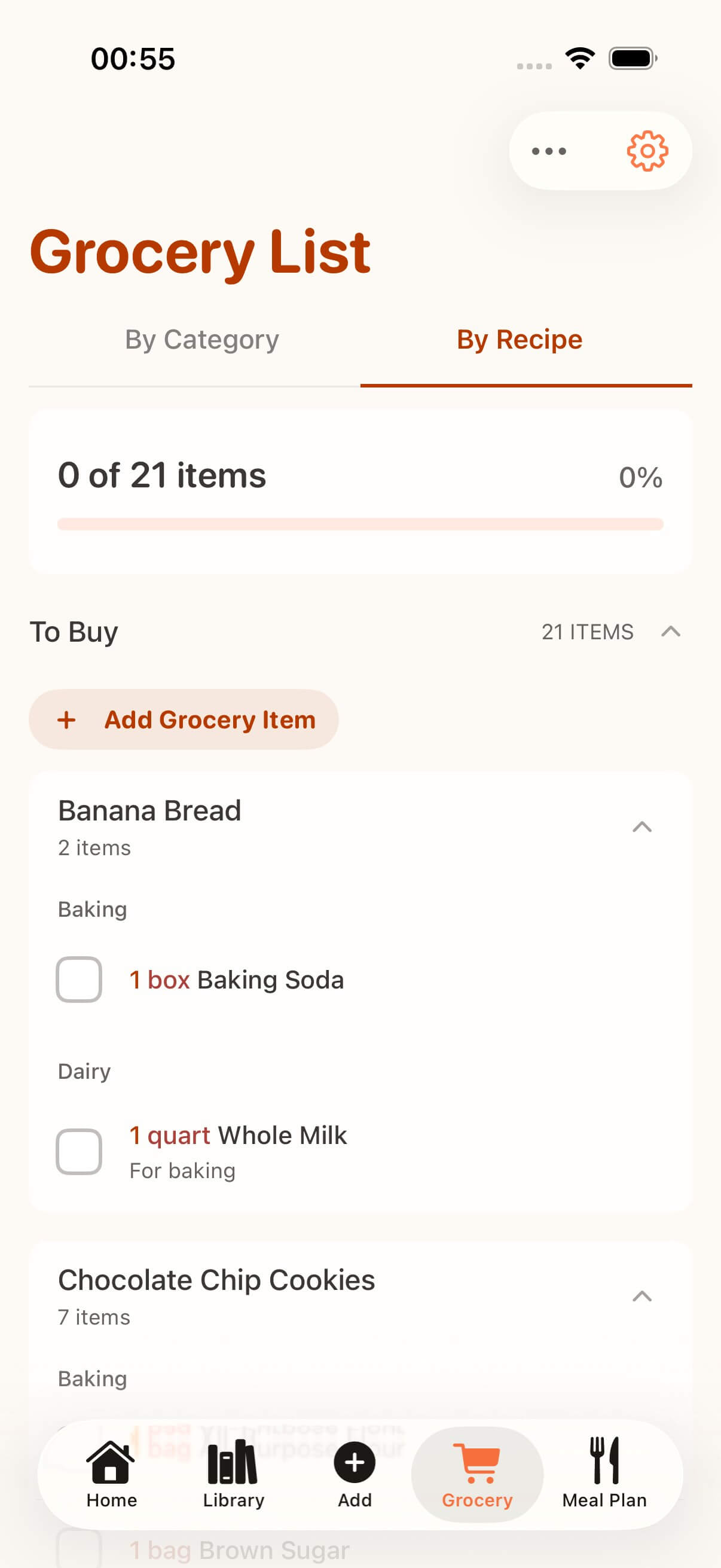
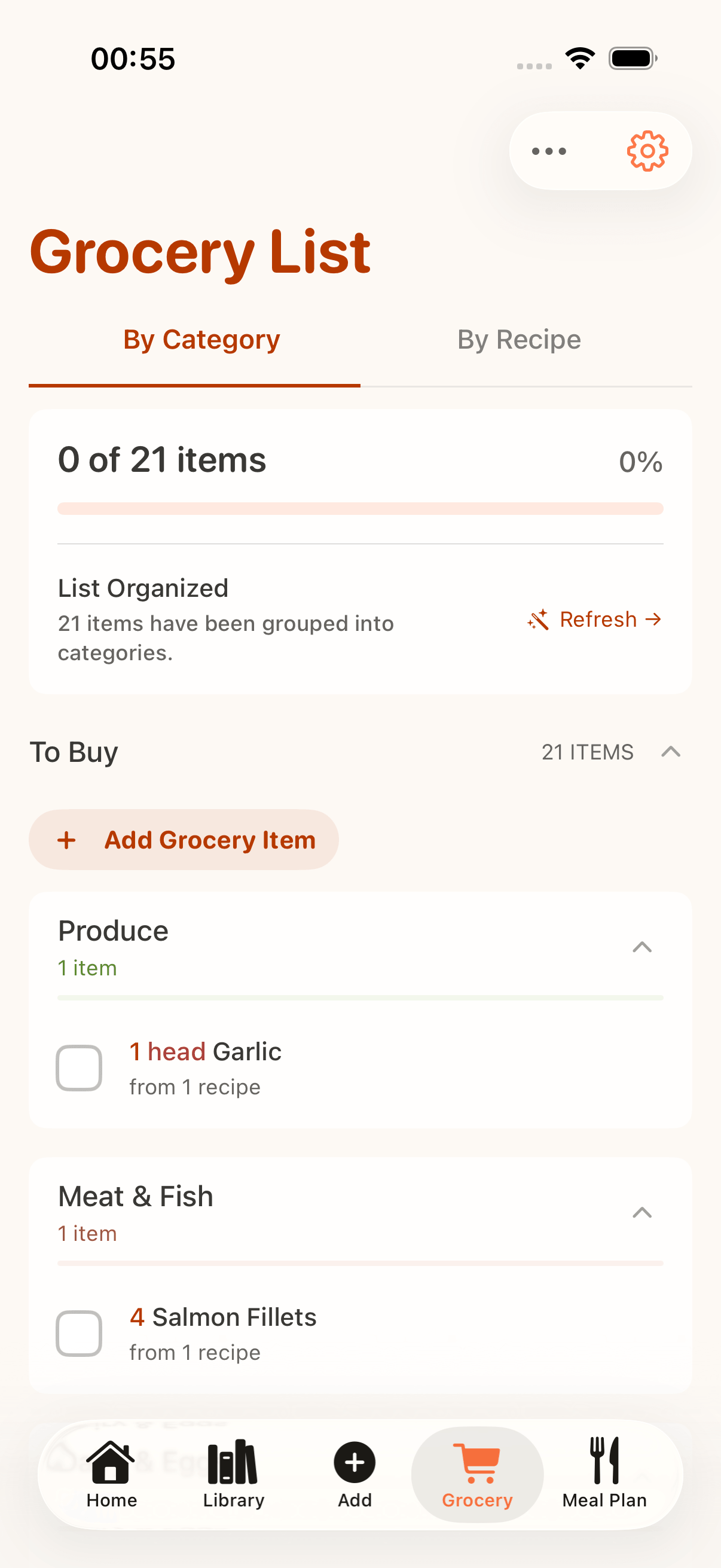
These are real CookClip screens. Swipe across on mobile, or compare all three on a larger screen.
Minutes 6–12: choose anchor meals
Pick three meals from your saved recipes. Use one proven favorite, one meal that consumes existing food, and at most one unfamiliar recipe on a busy week. Add leftovers and a flexible pantry or freezer meal around them.
Place the most demanding recipe on the day with the most capacity, not the day when it sounds most appealing in theory.
Minutes 12–18: build and trim the grocery list
Confirm servings, add the selected recipe ingredients, combine equivalent items, and remove pantry stock only after checking quantities. Include breakfasts, lunches, snacks, and household staples that the dinner recipes will not cover.
Minutes 18–20: note advance tasks
Write down thawing, marinating, soaking, batch cooking, or ingredient prep that must happen before the meal. Add a reminder only for tasks you would otherwise forget.
Then stop. A routine that consistently finishes is better than a perfect planning session that becomes another Sunday chore.
Practical checklist
Your twenty-minute Sunday sequence
- Review schedule and difficult evenings.
- Identify leftovers and perishables to use.
- Choose three anchor meals and one flexible fallback.
- Confirm servings and build one grocery list.
- Record thawing, marinating, or prep reminders.
FAQ
Common questions
What if Sunday is not my planning day?
Use any consistent time before your main grocery trip. The fixed sequence matters more than the day of the week.
Do I need to plan breakfast and lunch too?
Only to the level your household needs. Add repeatable staples or a few options rather than creating a detailed schedule for every meal.
How many dinners should I choose?
Three anchors plus leftovers and flexible meals work well for many busy weeks. Adjust to your household and schedule.
What is a good fallback meal?
Choose something made from reliable pantry or freezer ingredients that requires little planning, such as eggs, pasta, soup, dumplings, or a frozen favorite.
Try the workflow
Let saved recipes lead somewhere useful
CookClip connects your personal recipe library to meal planning, categorized grocery lists, ingredient-first ideas, and focused Cook Mode.