
Quick answer
Start with perishables and meal-defining ingredients
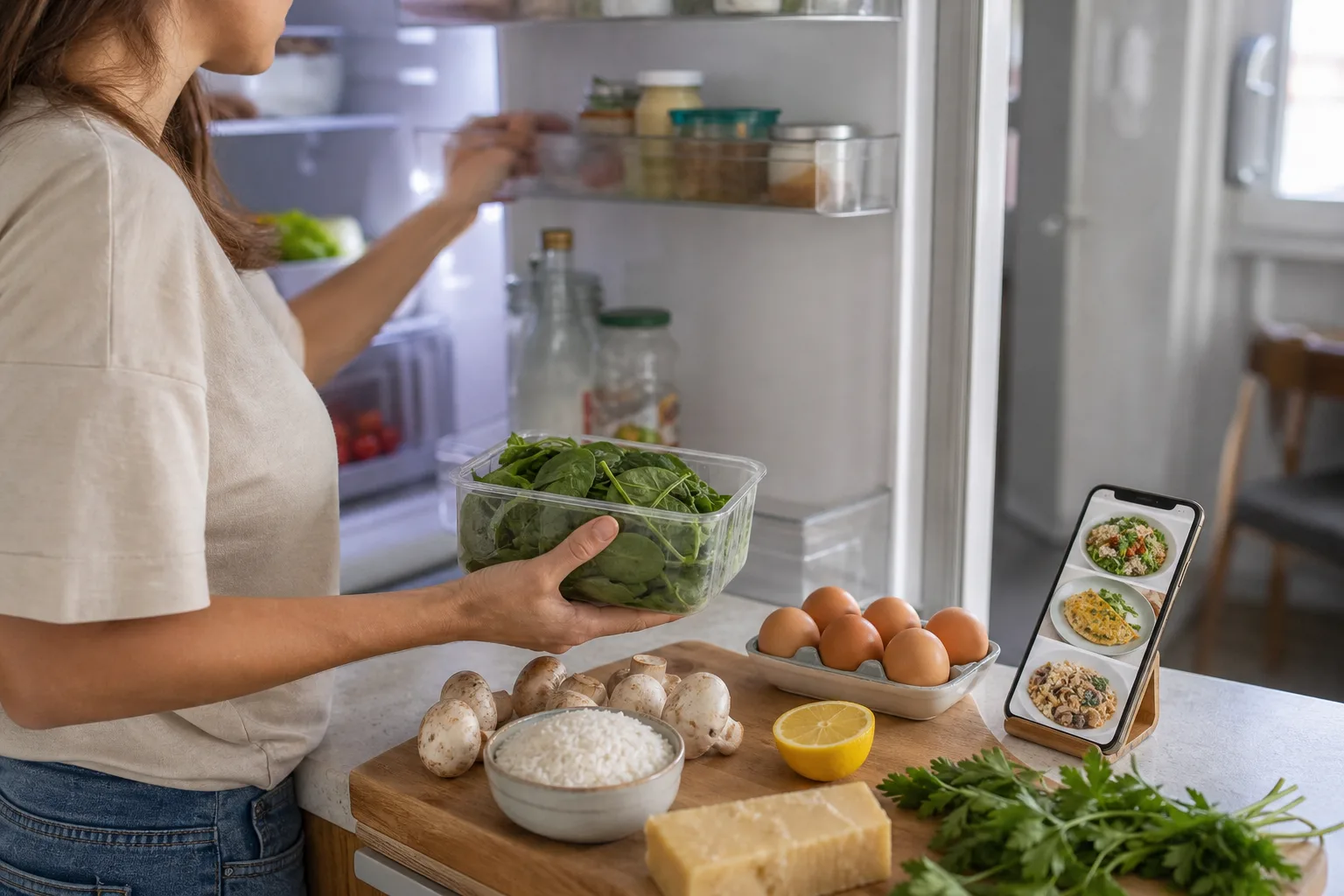
List the ingredients that need using first, add the main proteins or starches you have, search your saved recipes for strong coverage, then check the few missing essentials and the time required before choosing a meal.
Inventory what matters, not every spice
Begin with ingredients that are expensive, perishable, or meal-defining: spinach, mushrooms, cooked chicken, tofu, eggs, rice, potatoes, beans, or bread. Add pantry basics only when they meaningfully change the options.
A complete household inventory is difficult to maintain. A short list for tonight is usually enough.
Search saved recipes first
Your own library contains recipes you already chose and may already trust. Search by two or three important ingredients rather than one broad term. Rank results by how much of the recipe you can cover and whether the missing items are true essentials.
CookClip’s “What can I cook today?” workflow can match available ingredients against saved recipes and, for eligible Pro use, expand into generated ideas or online discovery.
Inside the app
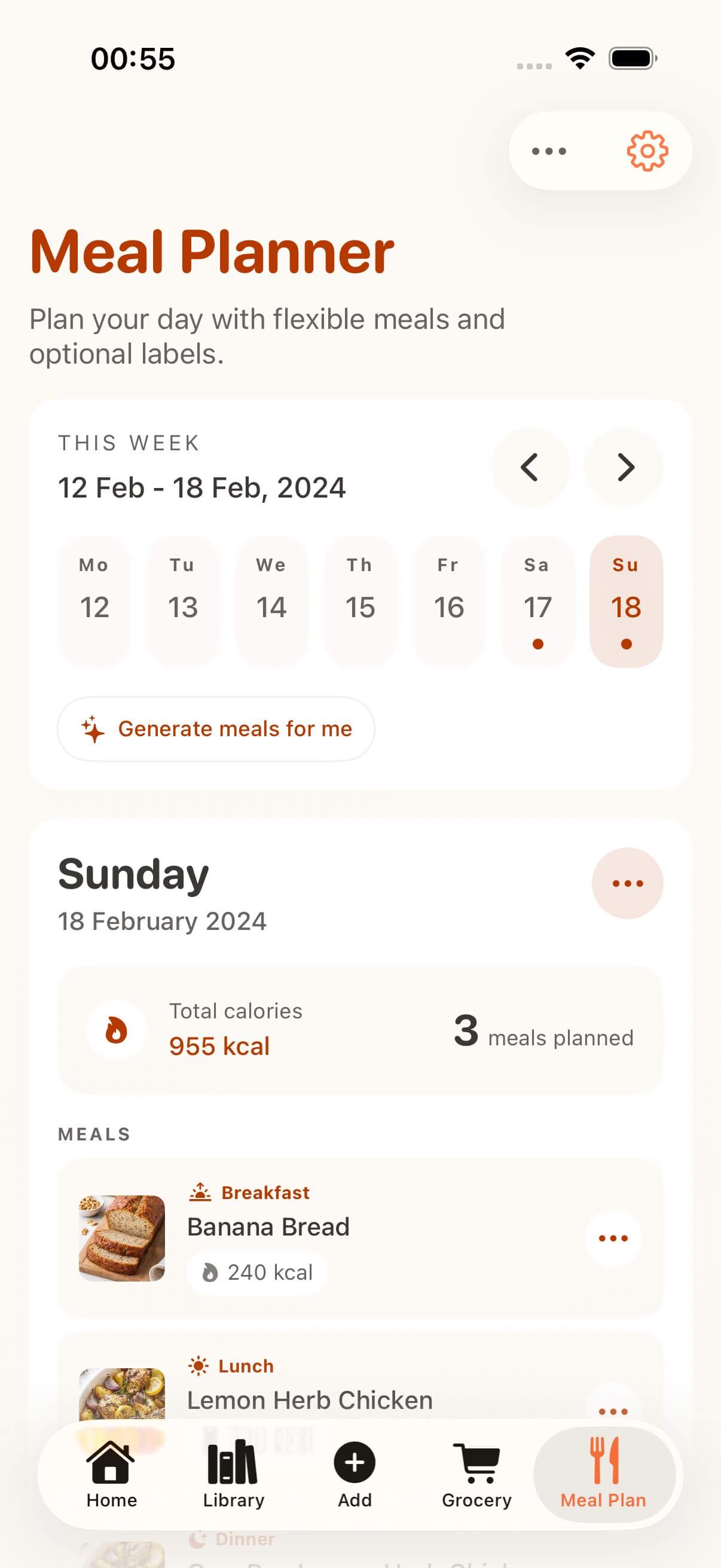
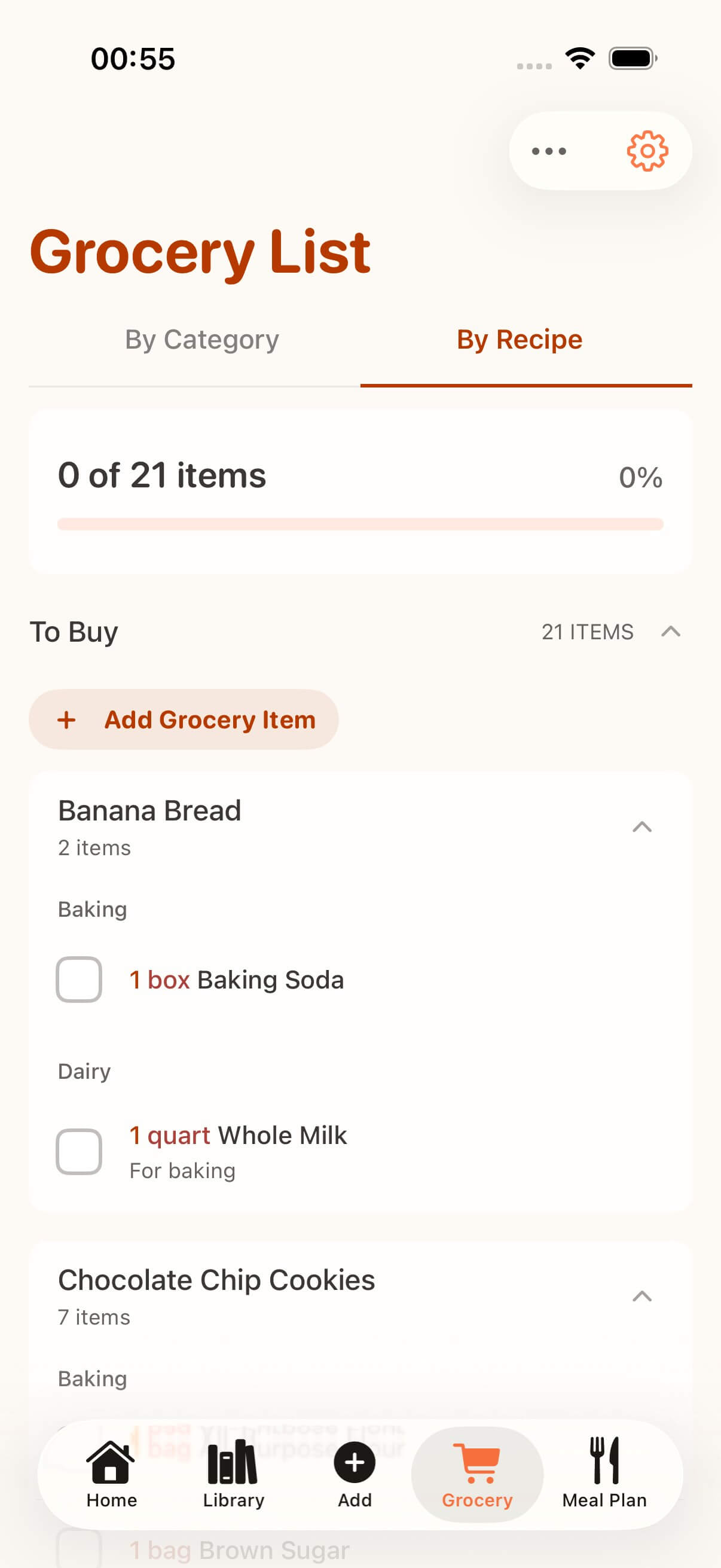
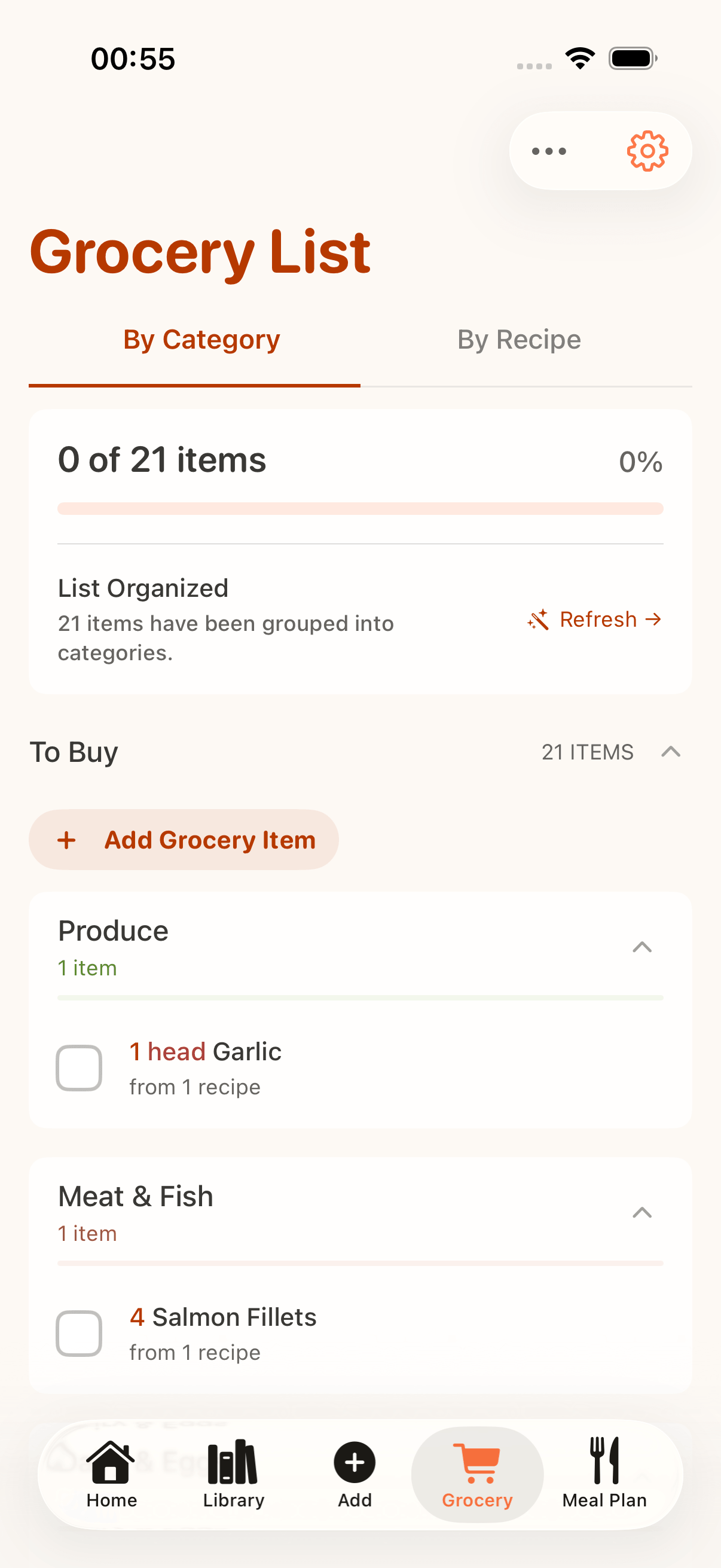
See the workflow in CookClip
These are real CookClip screens. Swipe across on mobile, or compare all three on a larger screen.
Distinguish an essential gap from an optional one
Missing salt is different from missing the main protein. A garnish may be optional; a binding ingredient, leavening agent, or primary sauce component may not be. Read the full recipe before assuming a high percentage match means it is cookable.
Use substitutions only when they fit the role of the original ingredient and your dietary or allergy requirements.
Choose by energy as well as ingredients
The best match can still be wrong for tonight if it requires marinating, long chilling, specialist equipment, or more active work than you have. Filter mentally by active time, skill, and cleanup.
A slightly lower ingredient match that becomes dinner in twenty minutes may be the better answer.
Turn near-matches into a small shopping plan
When no saved recipe is fully covered, shortlist two or three meals with the smallest useful gaps. Add only the essential missing items and prefer a choice that uses several perishables before they spoil.
Practical checklist
Five-minute ingredient-first search
- List two to five perishables or main ingredients.
- Search saved recipes using combinations, not single terms.
- Identify essential versus optional missing items.
- Check active time, equipment, and cleanup.
- Choose the meal that uses food well and fits tonight’s energy.
FAQ
Common questions
Do I need to inventory my entire pantry?
No. Start with perishables and meal-defining ingredients. Add pantry items only when they help narrow the choice.
What makes a recipe a good ingredient match?
Strong coverage of important ingredients, few essential gaps, and a method that fits your time and equipment.
Can I substitute every missing ingredient?
No. Consider the ingredient’s role, flavor, structure, safety, and dietary requirements. Some missing essentials should send you to another recipe.
Should I search online before my saved recipes?
Your saved library is a useful first pass because you already selected those recipes. Expand online when the library has no realistic match.
Try the workflow
Let saved recipes lead somewhere useful
CookClip connects your personal recipe library to meal planning, categorized grocery lists, ingredient-first ideas, and focused Cook Mode.