Quick answer
Use collections for purpose and tags for properties
Put recipes into collections when you want to browse a deliberately curated group such as Weeknight Dinners or Holiday Baking. Add tags for reusable qualities such as vegetarian, freezer-friendly, one-pot, or 30-minute. Use favorites for proven winners and search for titles and ingredients.
What a recipe collection is for
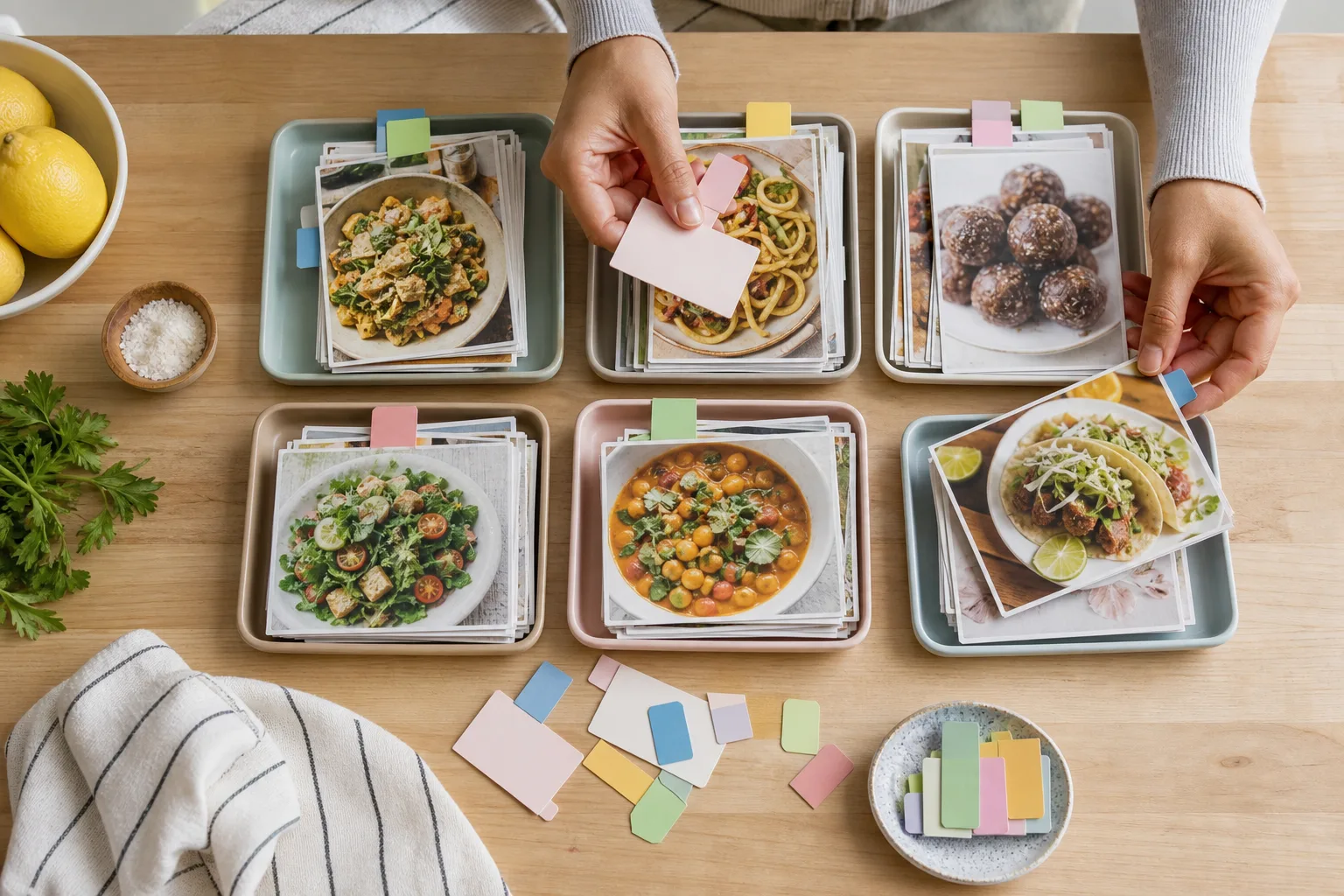
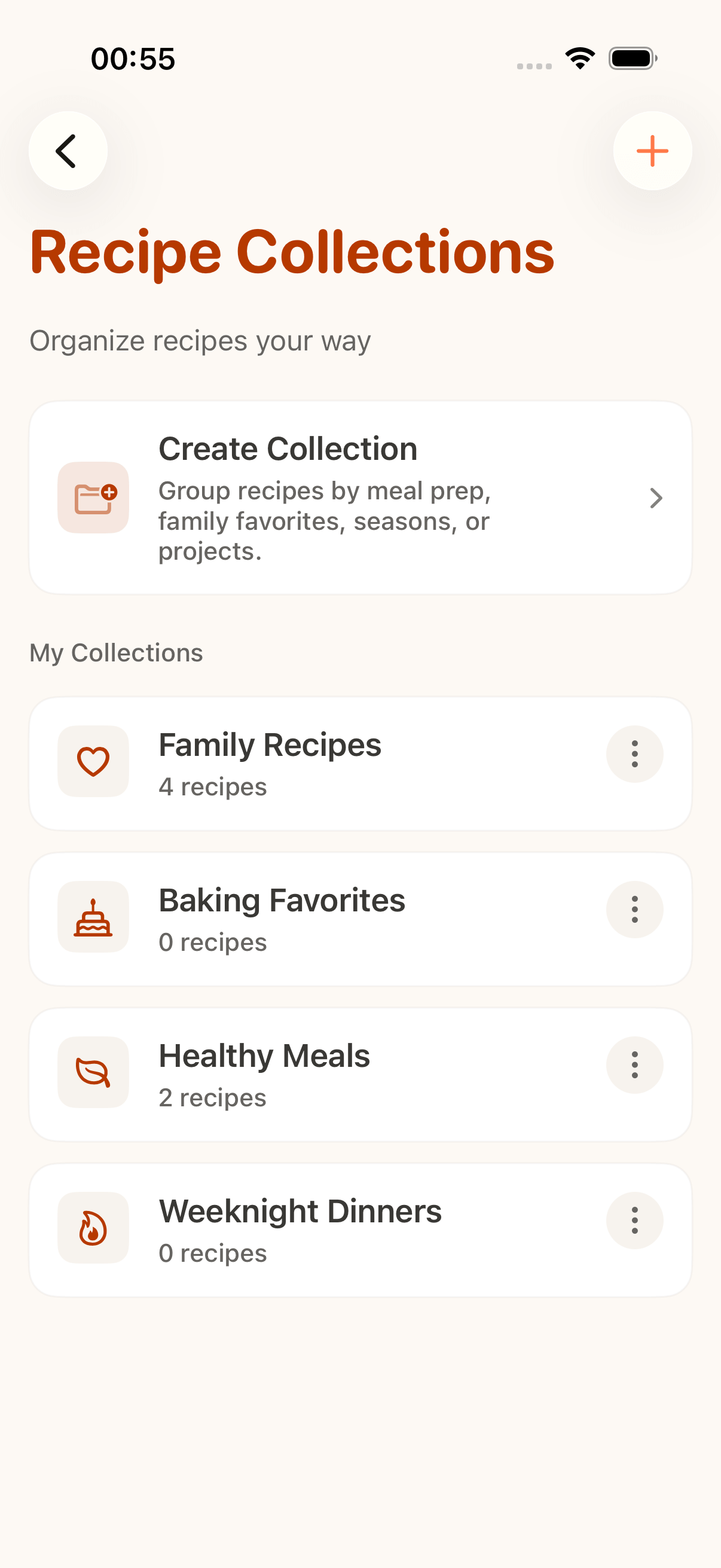
A collection is a shelf you intentionally browse. Its members belong together because they serve the same decision or occasion: Cook Soon, Family Recipes, Christmas Baking, Packed Lunches, or Dinner Party.
Collections should feel edited. If every recipe belongs to Dinner, a giant Dinner collection may add less value than search and a smaller Weeknight Favorites shelf.
What a recipe tag is for
A tag describes a quality that can apply across many collections. Vegetarian, spicy, freezer-friendly, high-protein, slow cooker, and 30-minute are useful because several may describe the same recipe.
Tags are filters, not miniature folders. Keep the vocabulary consistent and avoid creating near-duplicates such as meat-free, veggie, and vegetarian unless they mean different things in your household.
Inside the app
See the workflow in CookClip
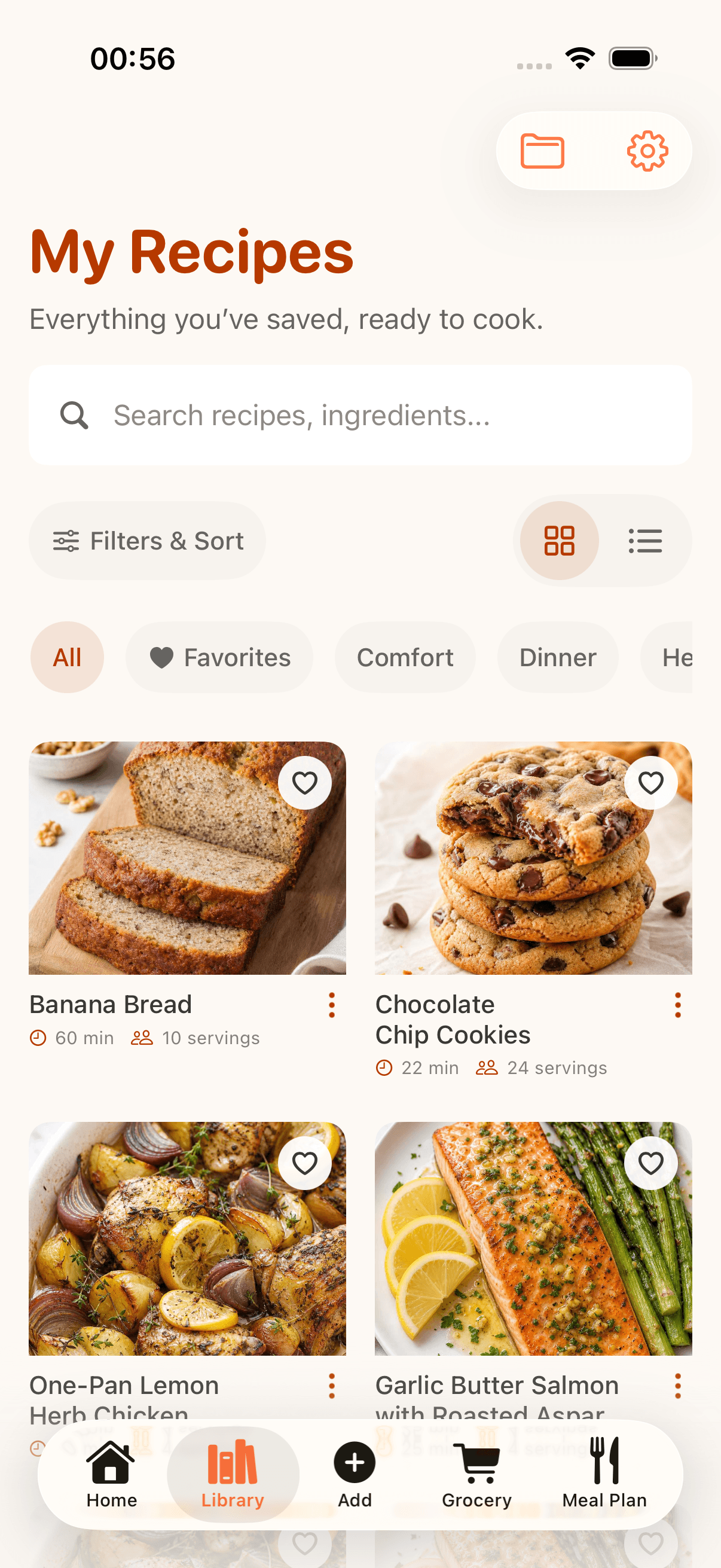
These are real CookClip screens. Swipe across on mobile, or compare all three on a larger screen.
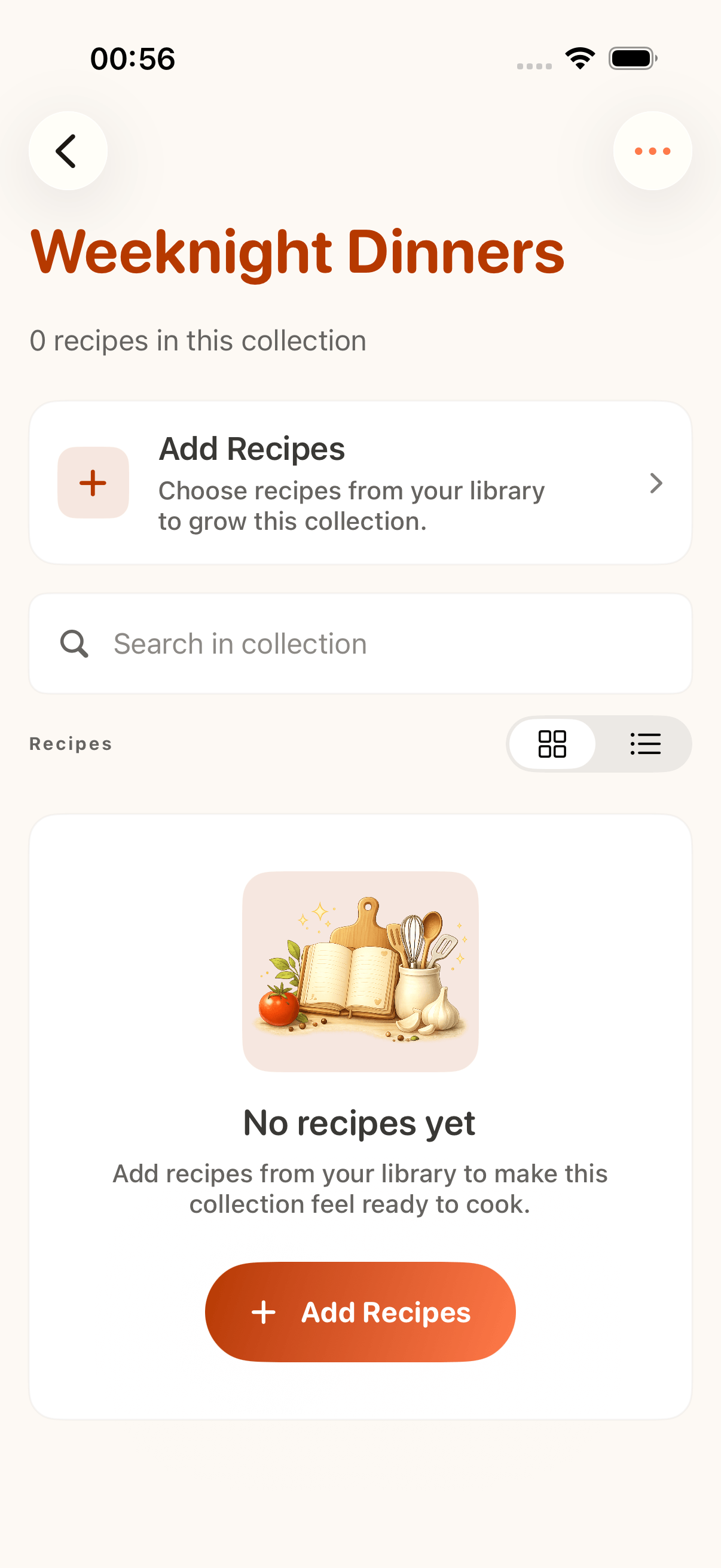
Where favorites and search fit
Favorites answer a different question: which recipes have earned trust? Mark dishes you have cooked successfully and want to repeat. A favorite should be a signal, not a second inbox for anything that looks good.
Search handles names, ingredients, and text that already exist in the recipe. Let it find tomato, chicken, or lasagna instead of tagging every ingredient manually.
A worked example
A lentil shepherd’s pie might live in Weeknight Dinners and Meal Prep. It can carry vegetarian, freezer-friendly, family-approved, and make-ahead tags. After two successful cooks, it can also become a favorite.
Each tool adds a different retrieval path without copying the recipe. That is the advantage of combining curated collections with overlapping tags.
When to simplify
If two collections always contain the same recipes, merge them. If a tag has one recipe after several months, remove it or wait until the concept is useful. Organization should reduce hesitation, not turn saving dinner ideas into data entry.
Practical checklist
Choose the right organizer
- Use a collection when you want to browse the group as a shelf.
- Use a tag when the quality can overlap several shelves.
- Use a favorite when you have cooked and trust the recipe.
- Use search for titles, ingredients, and source text.
- Remove labels that do not change a future decision.
FAQ
Common questions
Can one recipe belong to several collections?
Yes. A recipe can serve several curated purposes, such as Weeknight Dinners and Meal Prep, without being duplicated.
Should cuisine be a collection or a tag?
Usually a tag, because cuisine can overlap meal type, occasion, and cooking time. Use a collection only if you deliberately browse that cuisine as its own shelf.
Should I tag every ingredient?
No. Ingredient search already handles that detail. Reserve tags for qualities the recipe text may not express clearly.
What belongs in Favorites?
Recipes you have cooked, trust, and want to make again. Keeping the bar high makes Favorites a useful shortlist.
Try the workflow
Build a recipe library that stays easy to use
Use collections for curated groups, tags for overlapping qualities, favorites for proven winners, and search for the moment you are in.