
Quick answer
Preserve both the artifact and the cookable recipe
Photograph the original card in even light, create a separate editable recipe, verify every line against the handwriting, keep family-specific wording in notes, and back up both the structured recipe and the original image.
Photograph the card before it deteriorates further
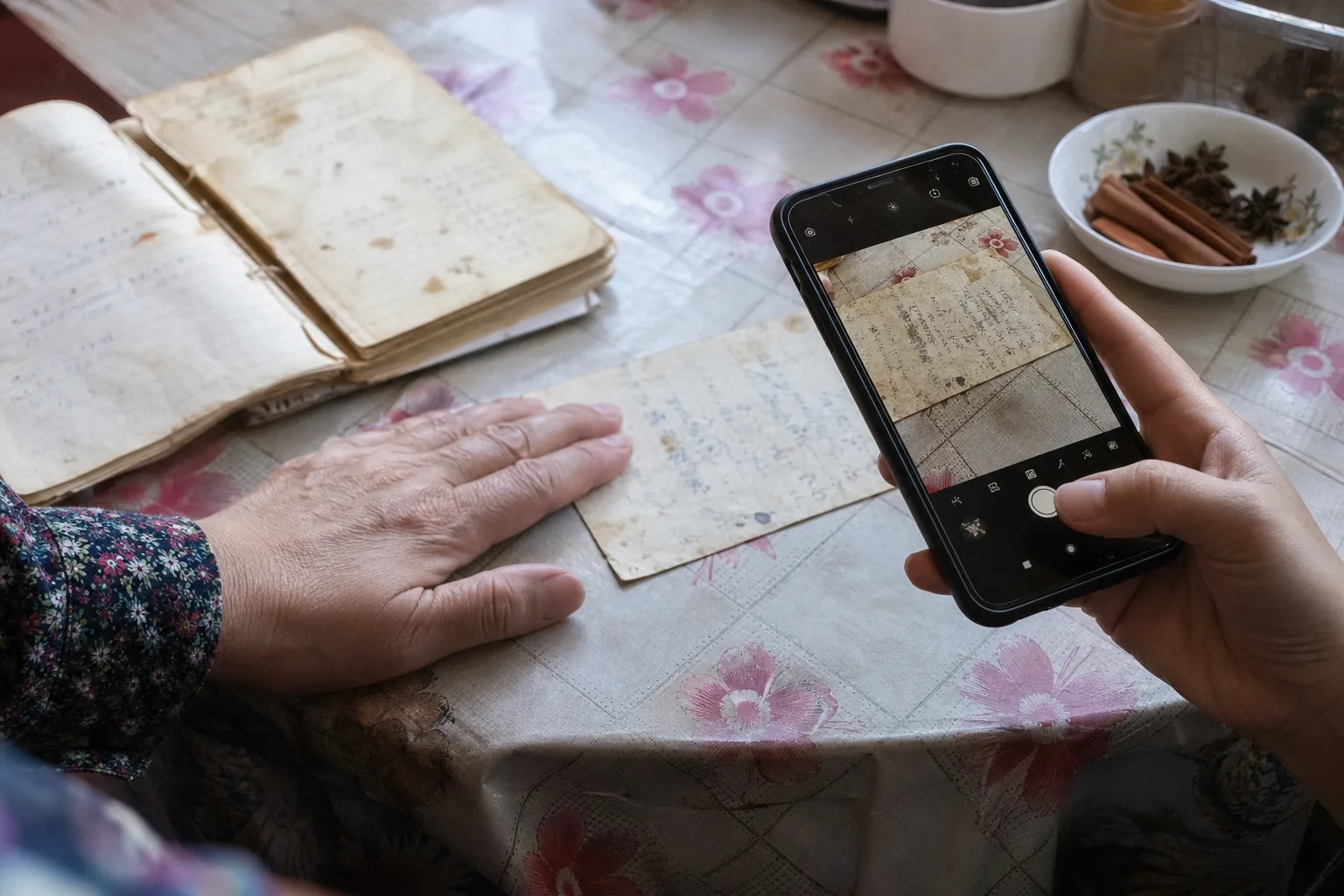
Place the recipe on a flat, contrasting surface near a window or under diffuse light. Hold the iPhone parallel to the page so lines stay straight, avoid hard shadows from your hand, and capture the front and back when the cook wrote on both sides.
Do not flatten fragile paper aggressively or erase stains. The goal is a legible preservation image, not a cosmetically perfect card. Food marks, corrections, and handwriting can be part of the family record.
Create an editable working copy
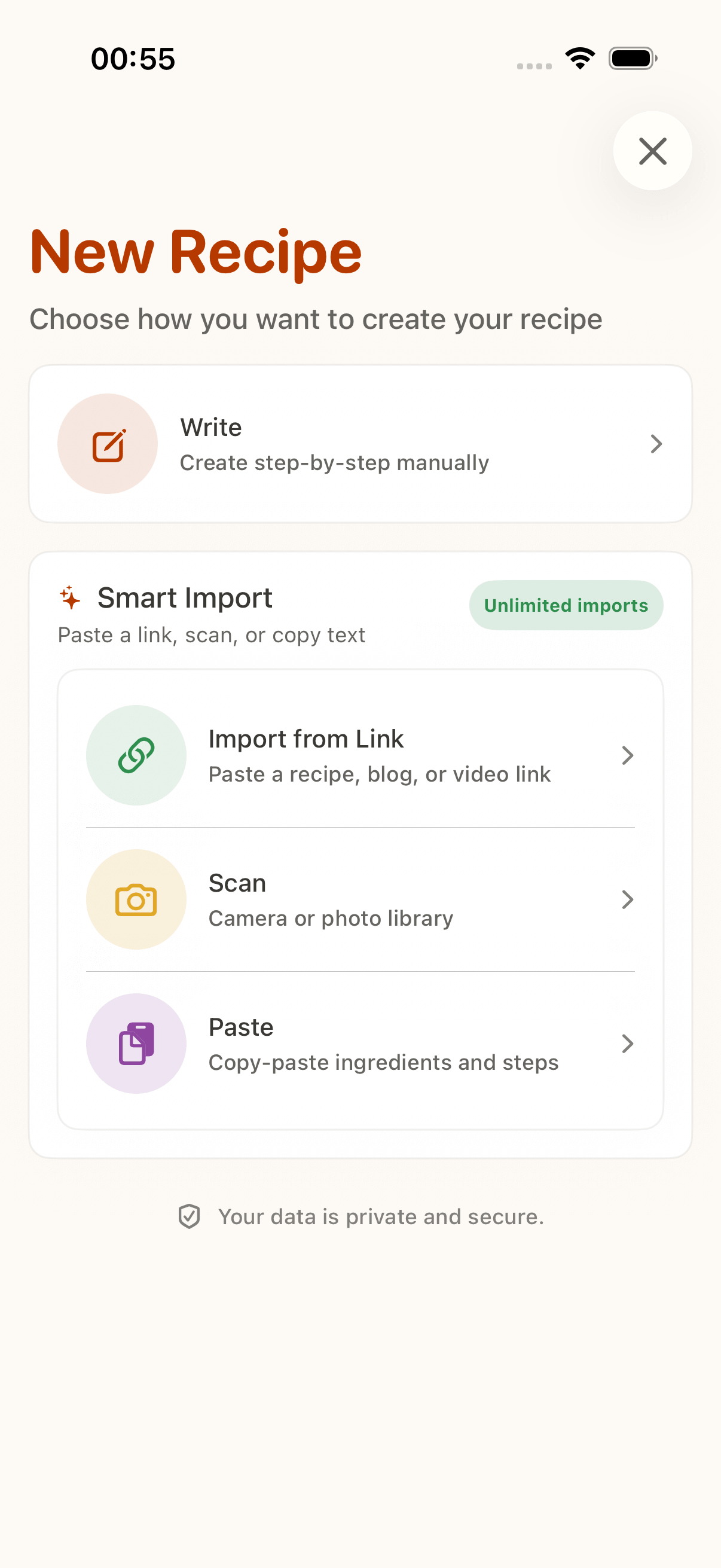
Use text recognition or a recipe scanning tool to build a draft, then compare it line by line with the photo. Handwriting, faded pencil, shorthand, and old unit conventions are harder to extract than clean printed text.
Keep the original image attached or stored alongside the structured version. The photograph preserves the artifact; the editable fields make the recipe searchable, scalable, and usable in a meal plan.
Inside the app
See the workflow in CookClip
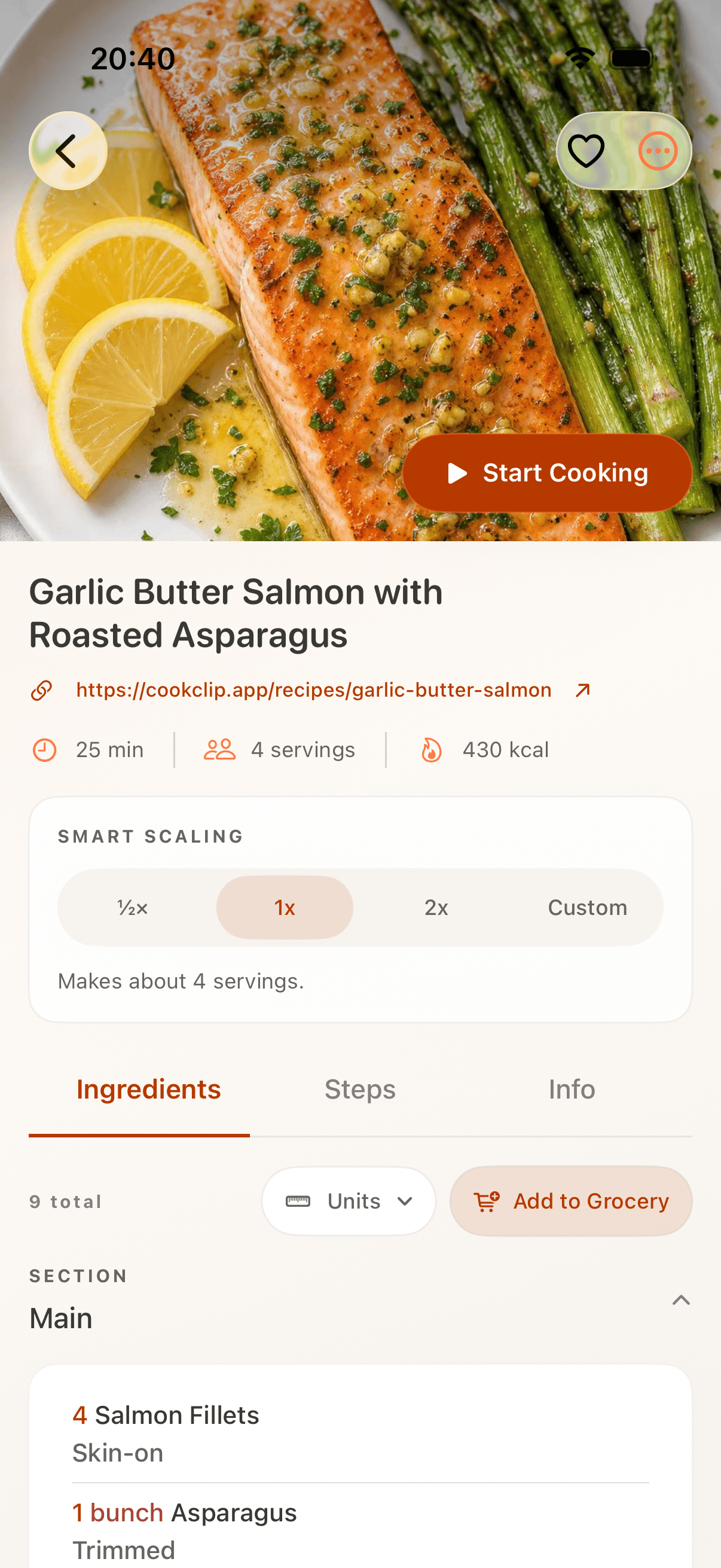
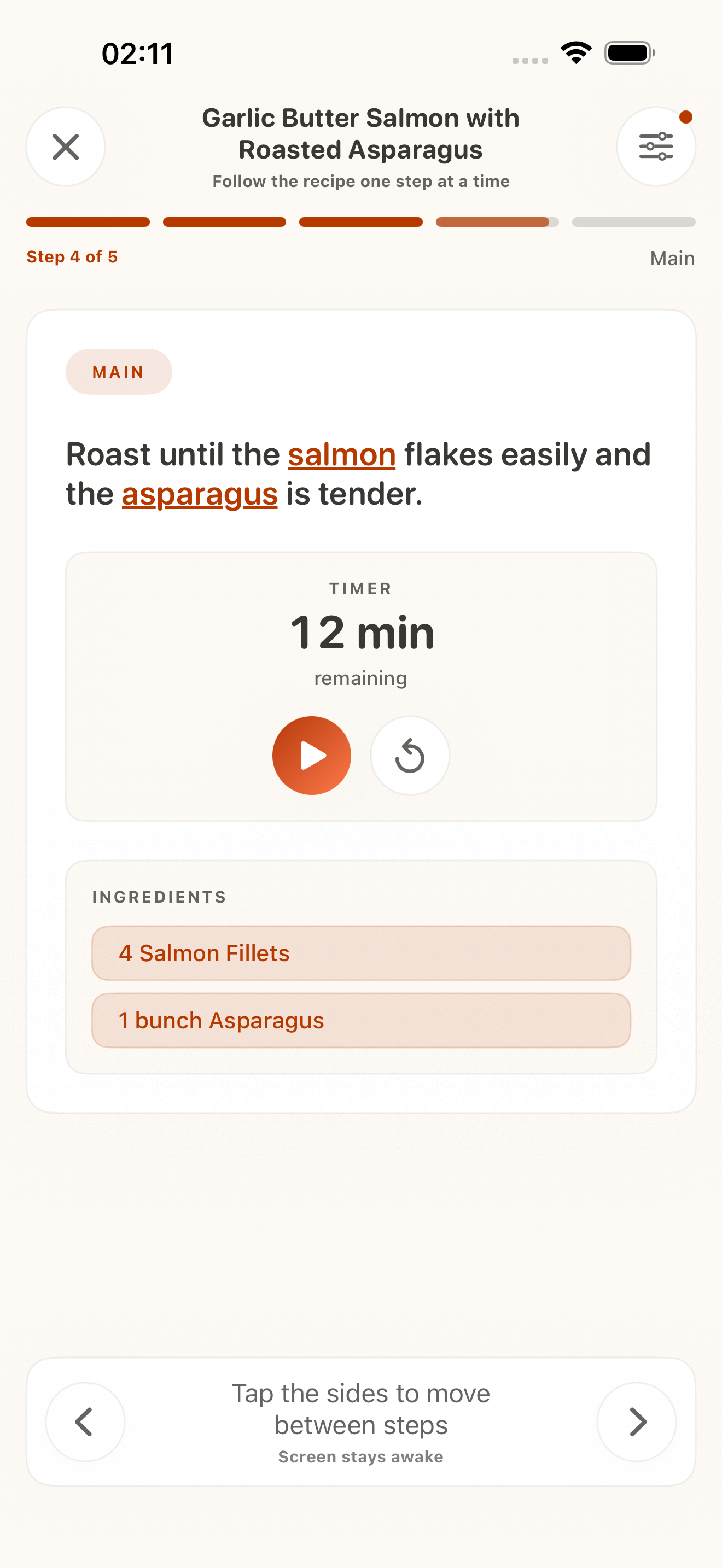
These are real CookClip screens. Swipe across on mobile, or compare all three on a larger screen.
Separate transcription from interpretation
First record what the card actually says. Then use notes to explain unclear wording such as “moderate oven,” “one packet,” or “bake until done.” If a relative clarifies the method, record who explained it and when instead of silently rewriting family history.
When you modernize a unit or temperature, keep the original value in a note. That makes future corrections possible and distinguishes inherited instructions from your tested adaptation.
Test ambiguous recipes safely
Many family recipes assume knowledge the writer never documented: pan size, flour type, ingredient brand, resting time, or the visual cue for doneness. Treat the first cook as a test and write down what you learn.
Do not improvise safety-critical preservation instructions from memory. For canning, fermentation, curing, or similar processes, compare the old card with current authoritative safety guidance before making the recipe.
Build a family collection with provenance
Use a Family Recipes collection and add practical tags such as Christmas, baking, or vegetarian. Include the original cook’s name, approximate date, region, and any story worth preserving. Back up the collection to an account you control and export or share copies with relatives when appropriate.
Practical checklist
Family recipe preservation checklist
- Photograph front, back, envelope, and any attached note.
- Record who wrote the recipe and where it came from.
- Transcribe first; interpret unclear instructions in notes.
- Verify every amount, unit, time, and temperature.
- Back up the original image and structured recipe in more than one place.
FAQ
Common questions
Should I clean stains from the card before photographing it?
Only use safe archival handling. Stains and corrections may be part of the artifact, and aggressive cleaning can damage fragile paper or ink.
Can an iPhone read cursive handwriting accurately?
Sometimes, but results vary with handwriting, contrast, paper condition, and lighting. Treat extraction as a draft and compare every line manually.
Should I modernize old measurements?
You can add a tested modern equivalent, but preserve the original wording in a note so the change remains traceable.
What is the best backup approach?
Keep the structured recipe in a synced recipe library and retain the original photo in a separate backed-up photo or file archive.
Try the workflow
Save the useful version, not another mystery link
CookClip can turn links, shared sources, pasted text, photos, and screenshots into editable recipe drafts you can review and keep.